
Easy Homemade Non-Toxic Laundry Detergent Recipe

Laundry is part of everyday life, and the products we use can introduce fragrances, dyes, preservatives, optical brighteners, and other ingredients into our homes and waterways. Because our clothes, pajamas, towels, and bedding remain against our skin for hours at a time, laundry is one area where I prefer to keep ingredients simple and intentional.
In this article, I’ll show you the ingredients I choose to avoid and share the simple homemade laundry recipe I use to remove another toxic barrier to healing from my home.
Ingredients to Avoid
For me, creating a healthier home isn’t about living in fear of every chemical or trying to control every exposure. It’s about becoming aware of what we’re using regularly and choosing simpler alternatives when they make sense.
When shopping for laundry products, look for clear ingredient labels and consider avoiding ingredients such as:
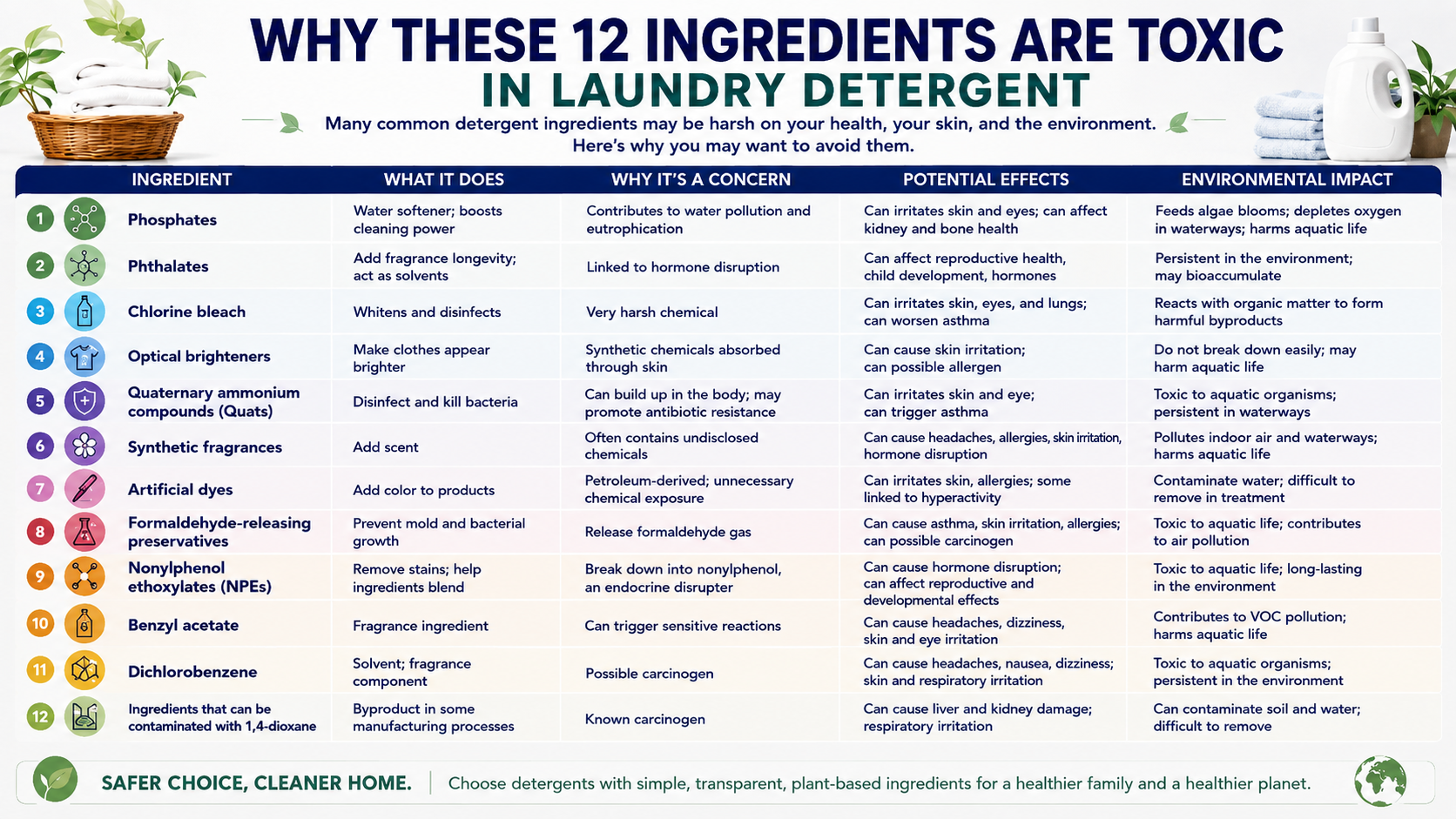
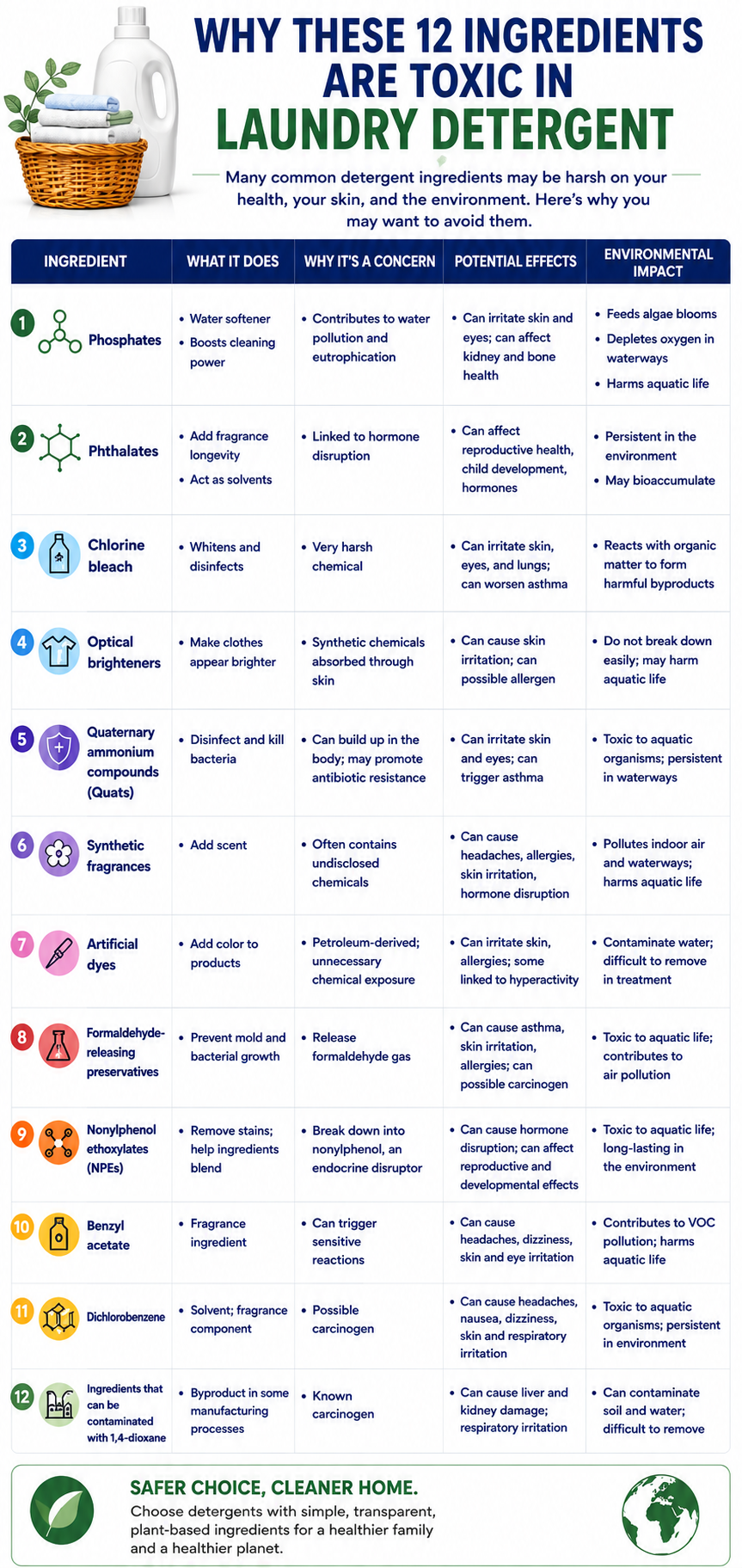
Creating a less toxic laundry routine can be easy and very rewarding. Choose fragrance-free or naturally scented detergent, skip fabric softeners and dryer sheets, and try wool dryer balls instead.
For a more detailed breakdown on these ingreditents along with other helpful tips, I recommend checking out this great resource from The Eco Shift.
My Simple Laundry Detergent Recipe
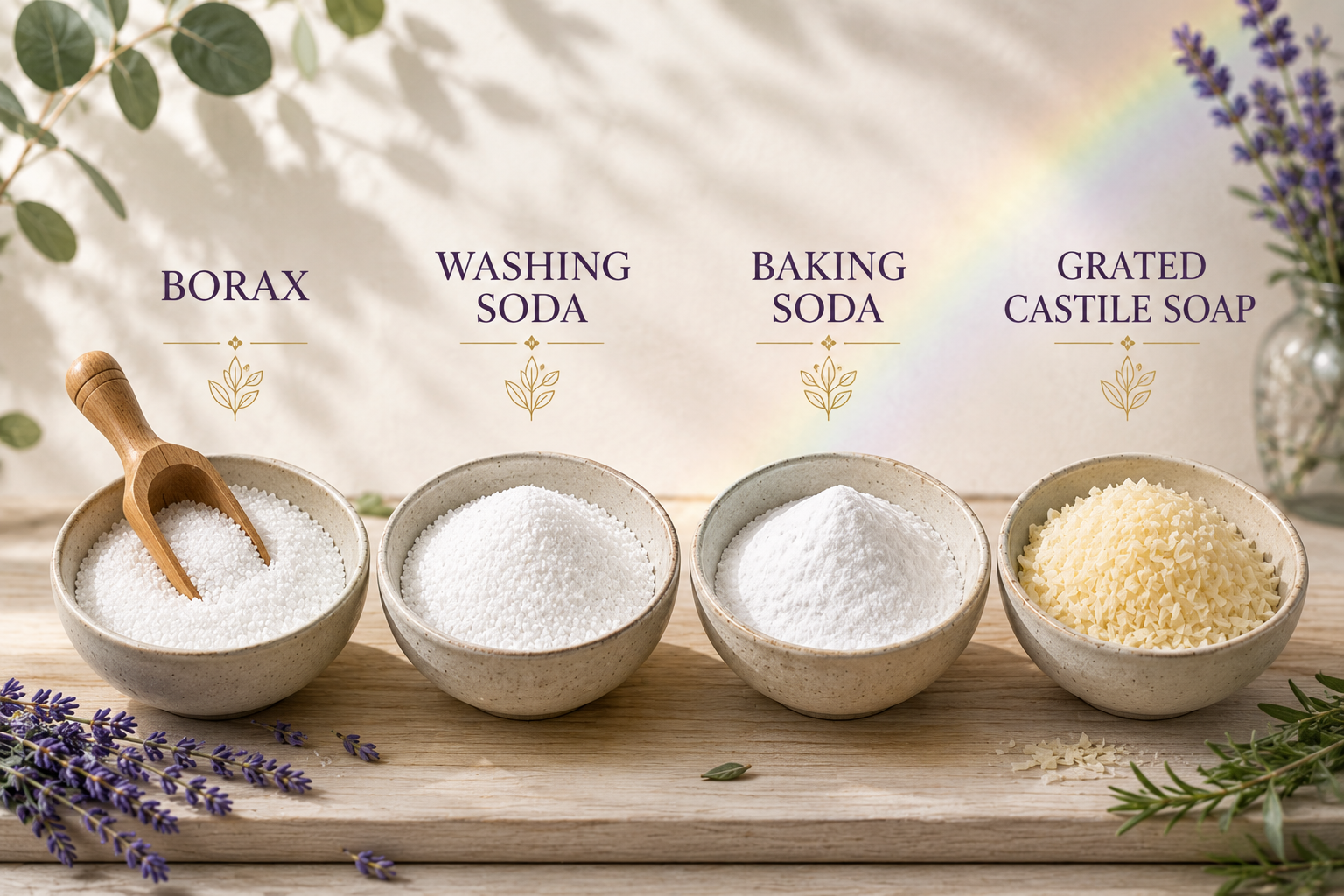
INGREDIENTS:
• 1 cup Borax
• 1 cup Washing Soda (sodium carbonate)
• 1/2 cup Baking Soda (sodium bicarbonate)
• 1/2 cup of finely grated unscented Castile soap
Before we get to the directions and how much to use per load, I’d like to explain a little about why I chose these ingredients.
Why I Chose These Four Ingredients
Part of conscious living is understanding what we’re bringing into our homes rather than simply replacing one product with another. I wanted this recipe to be simple, but I also wanted every ingredient to have a purpose.
These four ingredients work together in different ways. Some support the cleaning process, some help condition the water, and Castile soap provides the actual cleansing action. Here’s why I chose each one.
Why Borax?
Borax is a naturally occurring mineral compound primarily composed of sodium tetraborate, a boron-containing salt. It has been used for generations as a laundry booster because it helps create conditions that allow soap to clean more effectively.
Borax helps condition wash water, maintain an alkaline environment, loosen soils, and support odor removal. In this recipe, it works alongside washing soda and Castile soap to improve overall cleaning performance without relying on fragrances, dyes, or optical brighteners.
Why Washing Soda?
Washing soda plays an important role in this recipe because its alkalinity helps loosen oils and soils while also reducing interference from hard-water minerals.
Washing soda raises the pH of the wash water, which helps loosen greasy, oily, and acidic soils from fabric. This alkaline environment also helps Castile soap perform more effectively, making washing soda particularly useful in a homemade soap-based laundry formula.
Another major benefit is water softening. Sodium carbonate reacts with calcium and magnesium (the minerals responsible for hard water) and helps remove them from the wash water. This means fewer hard-water minerals are available to interfere with the Castile soap.
Its main laundry benefits include:
- Helps remove grease, oils, and stubborn soils
- Softens hard water by reducing calcium and magnesium interference
- Boosts the effectiveness of Castile soap
- Raises wash-water alkalinity to support cleaning
- Helps reduce mineral-related buildup during washing
- Fragrance-free and chemically simple
Why Baking Soda?
Baking soda, or sodium bicarbonate, is a naturally occurring alkaline compound that works particularly well as a laundry booster. Its mild alkalinity helps shift wash water to conditions that can make it easier to loosen certain soils, oils, and residues from fabric.
One of baking soda’s biggest strengths is odor control. Rather than simply covering unwanted smells with fragrance, sodium bicarbonate can help neutralize acidic and basic odor-producing compounds, helping clothes come out smelling genuinely fresher.
Baking soda can also help buffer the pH of wash water, supporting the performance of soaps and detergents while providing gentle cleaning action without dyes, optical brighteners, or synthetic fragrances.
For a homemade laundry formula, its main benefits are:
- Neutralizes odors rather than masking them
- Provides mild alkalinity to support cleaning
- Helps loosen soils and residues
- Supports detergent/soap performance
Why Grated Castile Soap?
Castile soap is traditionally made from plant-based oils that have been reacted with an alkali to create soap. Unlike baking soda or borax, Castile soap provides the actual surfactant action in a homemade laundry mixture.
Soap molecules have one end attracted to water and another attracted to oils and grease. This allows Castile soap to lift oily soils from fabric, surround them, and help carry them into the wash water so they can be rinsed away.
Grating a solid Castile bar increases its surface area and allows it to disperse more readily throughout the wash. When finely grated and combined with laundry builders such as washing soda, borax, and baking soda, Castile soap provides the primary surfactant action while the other ingredients modify the wash water and support cleaning.
Its benefits include:
- Lifts grease, body oils, and everyday soil from fabric
- Provides plant-derived surfactant action
- Contains relatively simple ingredients compared with many formulated detergents
- Can be purchased without added synthetic fragrance or dyes
- Grating makes a solid bar practical for a powdered laundry mixture
Because Castile soap is a true soap rather than a synthetic detergent, its performance can vary with water hardness. Calcium and magnesium in very hard water can react with soap and reduce its effectiveness, which is one reason washing soda is included in this recipe.
DIRECTIONS:
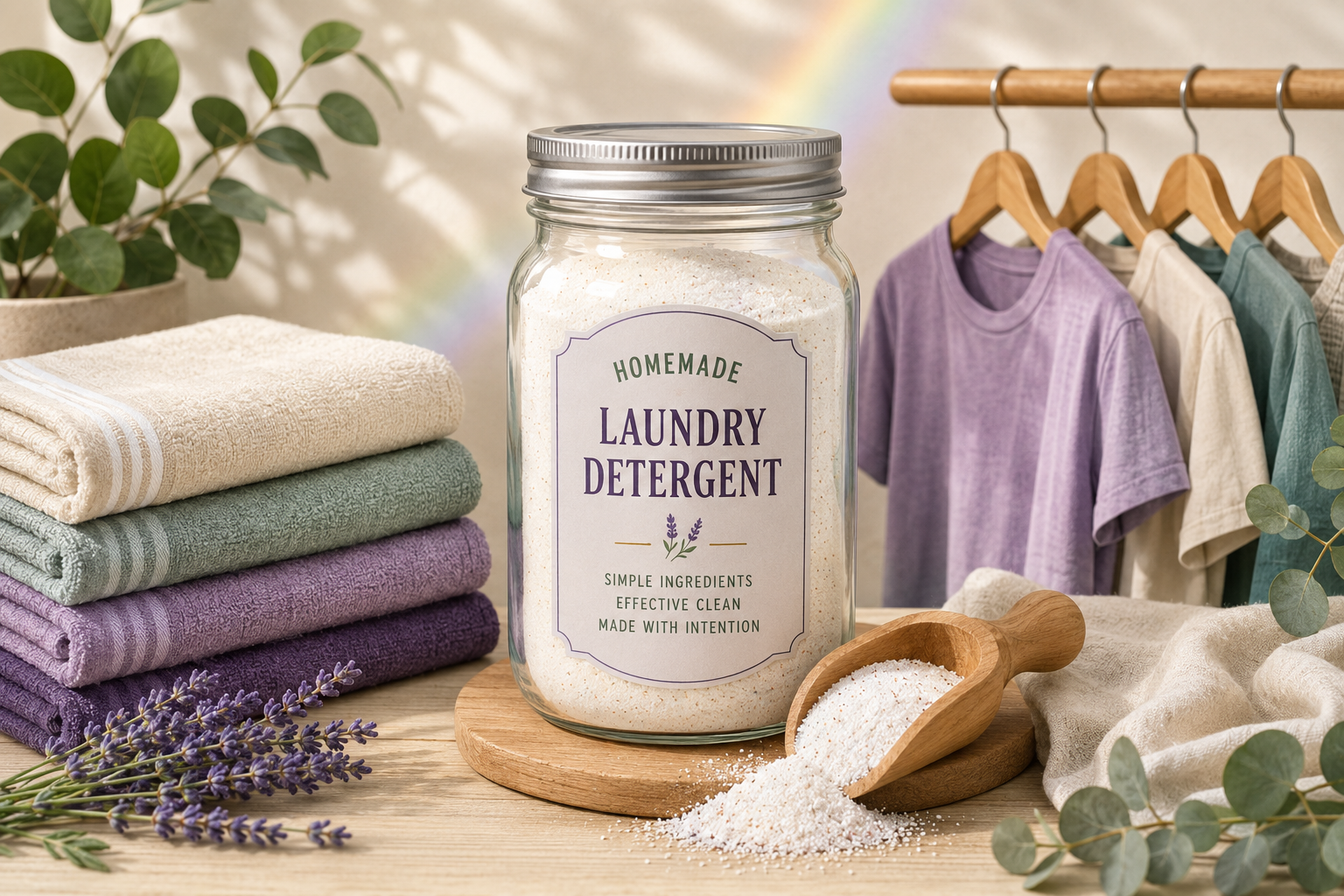
In a clean, dry 32-ounce wide-mouth Mason jar, combine the borax, washing soda, baking soda, and finely grated Castile soap. Stir thoroughly until evenly distributed. Keep tightly sealed and store in a dry location.
AMOUNT TO USE:
• For a standard top-loader: Start with 1–2 tablespoons per regular load.
• For HE washers: Start with 1 tablespoon per regular load.
• For large or heavily soiled loads: Up to 2 tablespoons.
A Note for Septic Systems
With any septic system, more laundry product isn’t necessarily better. I recommend starting with the smallest amount that cleans effectively rather than routinely adding extra powder. This also helps minimize unnecessary mineral, soap, and cleaning-product load entering the wastewater system.
ESSENTIAL OILS – COMPLETELY OPTIONAL:
If you wish to use essential oils, I first recommend reading this insight by Zenful to ensure it is done safely.
Essential oils aren’t necessary for this recipe to clean effectively. If you choose to use them for fragrance, you will want to use them sparingly and follow appropriate dilution and handling guidance. Essential oils contain concentrated aromatic compounds and can irritate sensitive skin, so fragrance-free laundry may be the better choice for sensitive individuals.
I personally enjoy lavender and eucalyptus, but they are entirely optional.
Simple Changes, Made Consciously
Creating a healthier home doesn’t require changing everything at once. Healing isn’t about chasing perfection or becoming afraid of everything around us. It’s about awareness—seeing more clearly what supports us, what may be getting in the way, and making intentional changes where we can.
Laundry is only one small piece of that picture. But our homes are built from hundreds of small choices, and over time those choices shape the environment in which we live, rest, and heal.
Keep it simple. Stay curious. Make changes from awareness rather than fear—and let each choice bring you a little closer to the kind of environment you want to create.