
The Yellow Cube Technique: How To Slow A Racing Mind
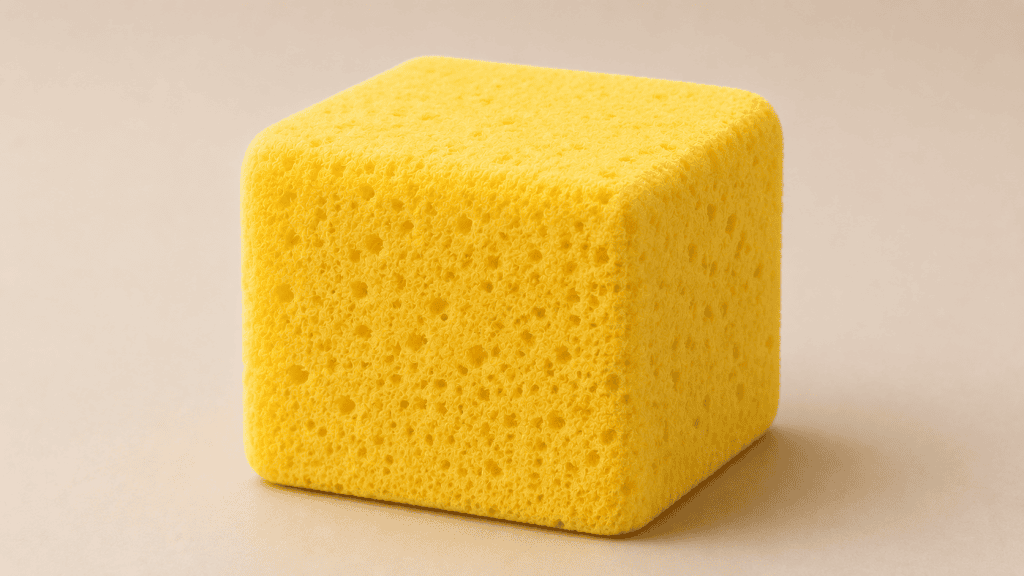
If sponge bob was the first thing that came to mind, I can assure you that no square pants have been included in this exercise.
Several nights ago I found myself lying in bed, unable to stop my racing mind. Looping varying but similar, unproductive thought patterns at 4AM proved to be a nuisance whose welcome had become overstayed.
Suddenly, a soft, squishy, and supple orange cube appeared in my mind. Although it first appeared orange, I instinctively changed it to yellow. For me, yellow evokes optimism, joy, and mental clarity, making it feel like a more fitting companion for the exercise.
I began imagining what it would feel like to squish the cube, feeling my hands clasp around the foam-like texture. Or was it rubber? Silicone? Was it more smooth?
When my fingers imprinted the cube when I applied pressure, I could see these imprints gradually fade as the object took back its original shape.
What Happened?
Through sensory redirection, I began immersing my senses using visualization which distracted my mind and interrupted the looping thought patterns that seemed to have dominion over my desire to sleep!
Rather than trying to force my thoughts to stop, which rarely works, I simply gave my mind something more engaging to do.
When we engage in vivid mental imagery involving touch, movement, texture, weight, and shape, we activate many of the same brain regions involved in experiencing those sensations directly.
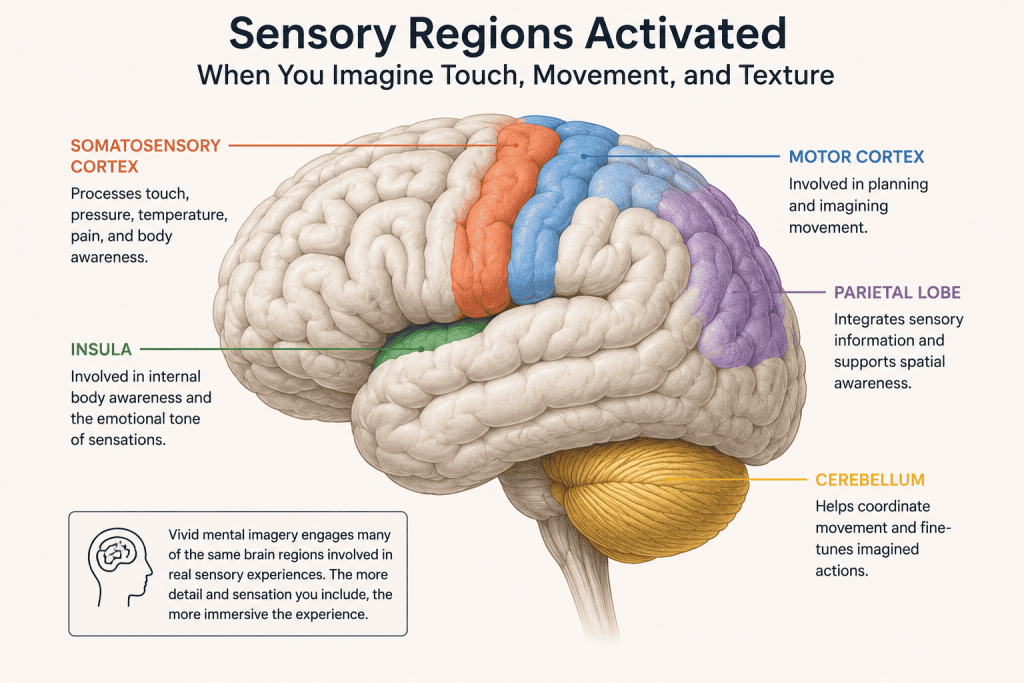
A Deeper Dive into the Mechanics: Proprioception
Proprioception is our body’s sense of position and movement and is known to be an aspect of our nervous system. An example is knowing where your hand is with your eyes closed, balancing on one foot, touching your nose, etc.
While imagining yourself squeezing an object, evoking proprioceptive sensations, we engage a combination of:
- Mental imagery (visualization)
- Somatosensory imagery (imagining touch and texture)
- Attentional control (redirecting focus)
- Working memory engagement
Another reason as to why meditation can be so engaging on it’s own, you are immersing yourself in the experience as if you ARE the experience itself unfolding at your own creative capacity!
Attention follows experience.
The more vividly you involve your senses, the less mental bandwidth remains available for repetitive thought.
Try It Tonight 🌙
The next time your mind refuses to slow down, don’t fight your thoughts.
Instead…
Imagine holding a soft yellow cube.
Squeeze it.
Feel it compress.
Watch it slowly return to its original shape.
Become curious.
You may discover that your mind follows your attention more willingly than you expected.
Further Reading
This experience reminded me of David Snyder’s work with the proprioceptive nervous system, which is the part of our awareness he associates with internal sensation, spatial awareness, and the felt experience of the body.
For an even deeper dive, if you are inclined to explore his broader body of work, you can visit David Snyder’s official website, NLP Power.
Disclosure: I am not affiliated with David Snyder or NLP Power, nor have I been compensated to mention his work. Any references in this article are offered out of personal respect for his teachings and as a resource for readers who wish to explore his perspective independently.