
Our Toxic Environment – Part 1: A Practical Guide to EMFs & Environmental Health

With how vast the topic of Environmental health is as it relates to modern times, this article is part of a 2-part series that aims to create awareness about the potential biological burdens of our modern environment and to empower people to make healthier choices to live more aligned with nature as a result of that awareness.
- Our Toxic Environment – Part 1: A Practical Guide to EMFs & Environmental Health
- All A Game
- Small Choices Compound
- The EMF Trifecta
- Artificial Non-native EMF's
- Natural EMF's – Grounding in Nature
- Self-generating EMF's (Healthy/Toxic)
- Quick Tips for Reducing Non-native EMF Exposure
- Recommended Educational Resources
- 1. Unplug Your Wi-Fi Router Before Bed (or go wired 😎)
- 2. Going Wired
- 3. BIOS System Tweaks on Windows PC's
- 4. To 5G/LTE, or Not to 5G/LTE
- 5. Smart Phone Bluetooth & Wi-Fi
- 6. Place Phone in a Faraday Bag
- 7. Wire the Smart Phone
- 8. Smart Meter Opt-outs
- 9. Infotainment Systems In Newer Model Vehicles
- Final Thoughts
We are energetic, electrical beings composed largely of water, saline minerals, and countless interconnected systems. Over the years, our environment has become progressively toxic from our air right down to our water and the toxicity seems to be increasing as the years unfold.
Never in human history have we been simultaneously immersed in thousands of synthetic chemicals, pervasive artificial lighting, chronic noise, highly processed foods, sedentary lifestyles, and continuous wireless technologies.
While each burden may seem small in isolation, together they create a biological environment that is unlike anything our ancestors evolved within.
We have been equipped with perhaps the most remarkable technology ever created; the human body. Its ability to heal, adapt, and regenerate is extraordinary.
The challenge is that many aspects of the modern environment can create barriers that interfere with our natural healing processes.
The body is a temple and is the foundation from which we build a thriving and satisfying life upon. As my journey has proven, to truly take back control of your own health and well-being and step into a place of empowerment, we must uncover the barriers truly preventing us from healing.
The goal of this article isn’t to create fear of technology, but to cultivate awareness. Every day we make countless decisions that either increase or reduce the demands placed on our bodies.
By becoming more aware of our environment, we can make small, intentional changes that may create more space for healing and resilience over time.
The environment shapes the body. Awareness shapes the environment.
Health Is Wealth

A Strong Foundation
Your health is your wealth. As mentioned in the previous section, the body’s health is the foundation from which we build our house upon.
If you build your house upon clay or sand, the structure will not hold for long and resiliency will come under scrutiny the moment you are tested.
Resilience isn’t built during the storm, it is built long before it arrives.
The healthier and more at ease you are in this life, the more capacity you will have for ANY storm that tests you. The greater capacity you have to make sound decisions under pressure, and the quicker your recovery time will be.
Removing the Barriers
It all begins with becoming aware of, and addressing what is hindering our bodies healing processes and simply removing the barriers!

By having the awareness, you can then make the choices (even if small at first) that can drastically enhance your wellbeing. Similar to the momentum effect I mention in my article about presence.
Healing doesn’t always begin by adding more. Sometimes it begins by removing what’s standing in the way.
All A Game
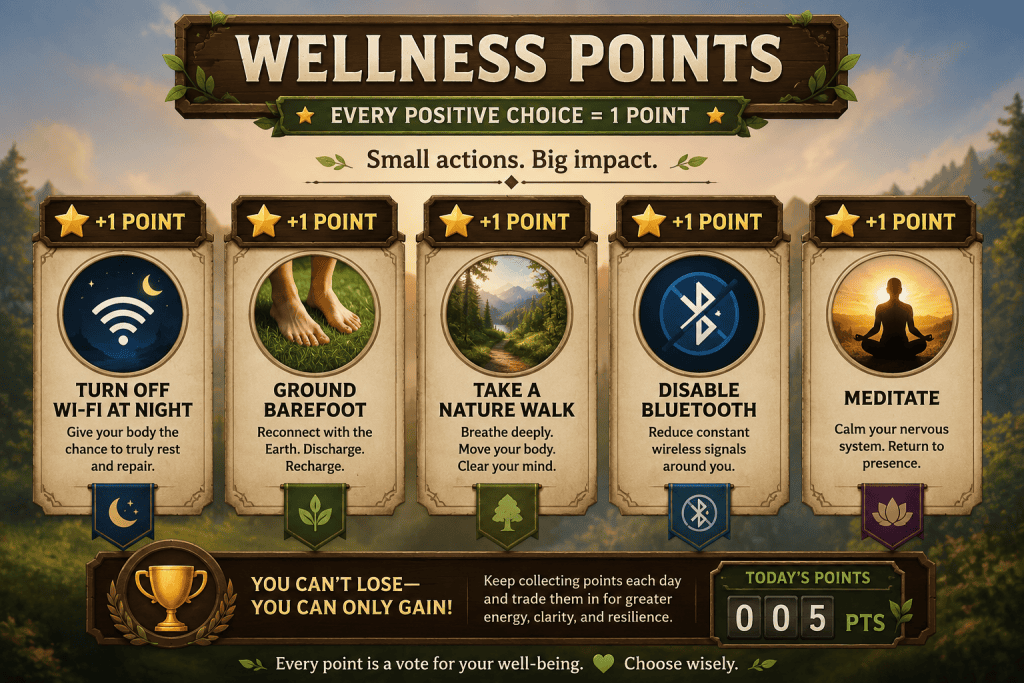
The encouraging part is that meaningful change rarely happens all at once. More often, it begins with one small decision that naturally leads to another.
Momentum has a way of building on itself, and before long, those small choices become part of a healthier way of living.
See your wellbeing as a game where each action you take towards your it’s enhancement, equals 1 point. In this way, you can only accumulate points so there is no losing, only gaining!
Every intentional choice is a point invested in your future health.
Small Choices Compound
You trade your points for increased well-being. A good example, turning off your Wi-Fi router at night equals 1 point that you trade for a massive upside to your energy levels and your bodies chance to more quickly heal and recover from stress through it’s nightly detoxification processes. Huge win!
The EMF Trifecta
EMF’s, otherwise known as Electromagnetic Fields or Frequencies, are magnetic fields. Some of which support life, and others that hinder or create barriers to healing.
There are many different kinds of EMF’s but from a simplified, wholistic perspective, the trifecta features 3, all of which effect our environment.
Not all electromagnetic fields are created equal.
- Artificial ⚡
- Natural 🌿
- Self-generating ❤️
Not every source of electromagnetic energy is inherently harmful, and not every person responds to environmental stressors in the same way.
Rather than viewing EMFs as something to fear, it can be helpful to simply understand the different sources around us and decide where small reductions make sense for our own lives.
Artificial Non-native EMF’s
Artificial non-native EMF’s are essentially artificial frequencies not found in nature, and are unrecognized by the body. Non-native EMF’s are generated from:
Common Everyday Sources
- Cell phones
- Tablets
- Laptop computers
- Power lines
- Cell phone towers
- Car infotainment systems
Listening to Your Body
Our nervous systems naturally seek out the most harmonic frequency in our environment via sympathetic resonance. In the world of energy, this can be observed by how you feel as you move about your day.
When these artificial, non-native EMF’s encounter our bio fields, our nervous systems can react creating cascading effects on our health and well-being over time affecting how we live our lives and connect with others.
As someone sensitive to EMF’s, I have to be very mindful and aware of my body’s triggers through patterns presented to me over time.
These patterns are communicated to me via my body’s “notification system” and these notifications present as symptoms. To name a few:
Recognizing the Signs
- Headache
- Irritability
- Pressure
- Brain Fog
- Fatigue
Our body has a notification system. The question is, are we listening?
Becoming mindful of your EMF exposure and the source, is the first setp to help mitigate them, which I will share with you in this article as a direction you may choose to take for starters.
I highly recommend visiting the EMF Center (I am not affiliated) to familiarize yourself and learn more about EMF’s. The EMF Center is essentially a landing pad for all things EMF.
From health and safety info, exposure risks, FAQ’s, products and courses along with a plethora of helpful resources to educate and empower anyone seeking to lessen their exposure.
Natural EMF’s – Grounding in Nature

Nature’s Counterbalance
Grounding in nature is perhaps our greatest ally in mitigating non-native EMF’s via the earths’ harmonizing and natural EMF’s and I feel this is largely responsible for the rising interest in grounding.
Thankfully, we are finally discovering the benefits of discharging excess static and “electrical load” from the body which significantly lowers inflammation as research shows.
The research has produced fascinating evidence of a powerful and positive shift in the electrical state of the body and the electrodynamics of blood, and a boost to self-healing and self-regulating mechanisms.
Simply spending time barefoot in nature removes you from many common indoor sources of artificial wireless technology while reconnecting you with the Earth’s surface.
Simple Ways to Ground
There are many ways to practice grounding, each offering its own unique benefits. To learn more, visit my All About Grounding article.
The earth’s surface and the natural world are filled with electrons. When your body makes contact with a tree or when you stand in the grass, there is a quiet exchange process taking place where the earth absorbs the charged EMF static picked up throughout the day much like a grounding rod neutralizes electrical charge.
Nature isn’t just where we go to relax, it may be one of our greatest allies in restoring balance.
So, reducing overall EMF exposure naturally becomes necessary and thankfully, there are many pioneers in this space that are making waves in the digital landscape (no pun intended)!
Self-generating EMF’s (Healthy/Toxic)

Healthy
As we are energetic beings of frequency, we too have the ability to generate our own EMF’s by shifting our energy and feelings through intentional meditation utilizing many of my meditations linked below.
With practice, by using our imagination and other tools such as music and other sensual engagements, we can tap into these energetic states of being and recreate harmonic feelings we have either experienced before or ones we haven’t simply by immersing our senses in the possibilities.
For example, simple emotion recalls of the warm fuzzy feeling of reconnecting with an old friend, or seeing an object in a store window that reminds you of a friend, family member, or a humorous life event that makes you light up inside.
This is YOUR natural electromagnetic frequency (EMF) emanating from within you into the environment.
The frequencies we experience aren’t only around us, they’re also generated within us.
Toxic
In contrast, we can emit negative emotions based on societal conditioning and traumatic experiences that haven’t been fully procesesed and integrated, amongst others. See more about how words effect us in Words Are Your Wand.
It is important to note that people who emit negative emotions are not “bad people” or naturally toxic themselves, they are simply expressing pain, so compassion and forgiveness is advantagous and is the difference in helping someone to feel seen and heard for perhaps the first time in their life.
This is not to say that being intentionally disrespectful and unkind is permissible or should be tolerated but to discern what is yours vs. what is not (also within oneself) can be a very helpful skill to develop in these times to better support and detach by staying neutral and holding space.
Awareness is valuable, but awareness without action changes very little. Fortunately, reducing unnecessary exposure doesn’t have to be expensive or overwhelming. Many of the most impactful changes are surprisingly simple and often cost nothing.

Quick Tips for Reducing Non-native EMF Exposure
Below are some useful tips, or ‘free points’ in the game of enhancing your well-being and overall health. As I like to say, you don’t know what you are in, until you are out of it.
I encourage you to get curious and monitor how you feel when making these changes. Your body’s feedback is the ultimate indicator as to what works and what doesn’t!
You don’t know what you’re in, until you’re out of it.
Before we dive into some of my helpful tips, I would like to include a few additional resources you can explore if you feel called.
Recommended Educational Resources
The quick tips shared in this guide are intended to help you get started, but they are only one piece of the bigger picture. If you’d like to continue exploring environmental health and healthier technology habits, I highly recommend the following educational resources:
- Massachusetts for Safe Technology offers a comprehensive collection of research, educational materials, practical solutions, and community resources covering EMFs, wireless technologies, smart meters, schools, health care, and much more. It’s an excellent starting point for anyone wishing to deepen their understanding of environmental health.
- Safer Screen Time provides practical guidance for creating healthier relationships with digital technology, with resources focused on children, families, schools, and everyday strategies for reducing unnecessary screen dependence while encouraging more intentional technology use.
- National Call for Safe Technology is a collaborative organization bringing together individuals, researchers, health professionals, and community advocates to promote education, awareness, and practical solutions surrounding wireless technology.
Their resources include educational presentations, community initiatives, current news, and guidance for those interested in creating healthier technology environments and advancing informed public dialogue.
Disclosure: I am not affiliated with either organization. These resources are shared solely because I believe they offer valuable educational information for those to explore these topics further.
Massachusetts for Safe Technology

Educational resources on EMFs, wireless technologies, scientific research, and practical exposure reduction.
National Call for Safe Technology
Educational resources, community initiatives, and practical solutions that support safer technology and informed decision-making.
Safer Screen Time

Practical guidance for developing healthier digital habits at home, school, and in everyday life.
1. Unplug Your Wi-Fi Router Before Bed (or go wired 😎)
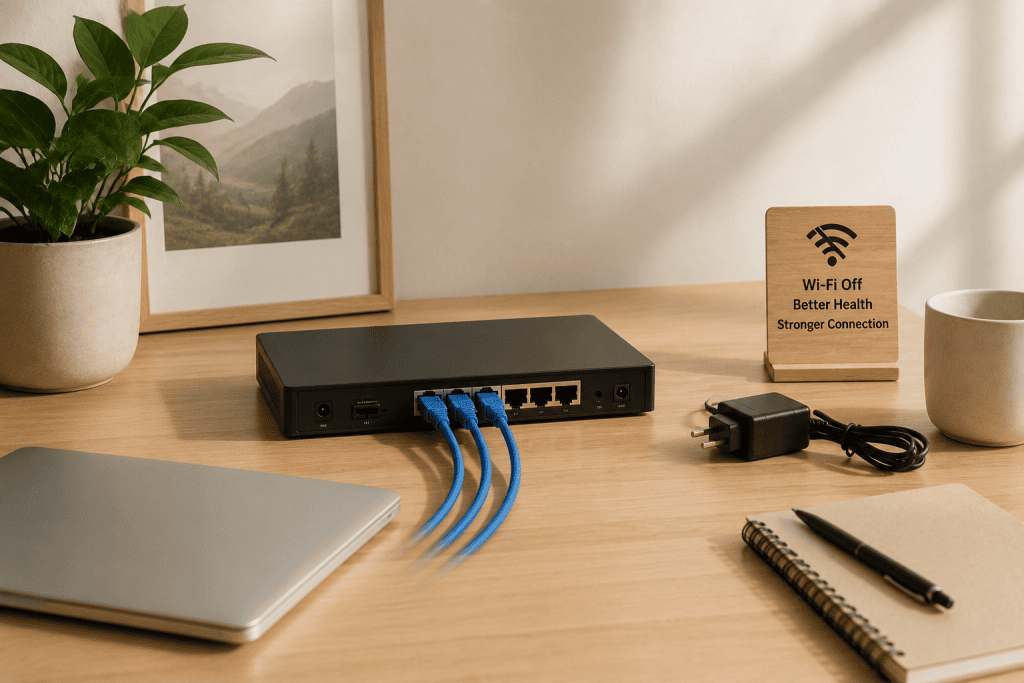
Night time is the time for cellular rejuvenation. It is when our bodies actively heal, restore and detoxify. To ensure this process remains optimal without influence, it makes sense let those cables sleep during the same time you do.
Many people report that by simply unplugging their wifi before bed, they wake up feeling more refreshed and rested than when they leave it plugged in.
Of course, you may even decide to go wired which is even better! I don’t use Wi-Fi or Bluetooth in my house let alone LTE data (which I will share later on).
If you elect to go the wired route below are some instructions on how to do that.
There isn’t one universal IP address, but these are the most common router login addresses:
2. Going Wired
Questions to Ask Before You Begin
- Do you have an unlimited data plan with your mobile carrier?
- Do you have family members that rely on wifi for school or other tasks?
You can always turn Wi-Fi back on when/if you need it.
What You’ll Need
To go wired, you will first need to pick up some CAT6 ethernet cables that are the correct length in distance from your router to all of your devices.
CAT6 cables have better RF shielding in cable which equates to lower EMR exposure.
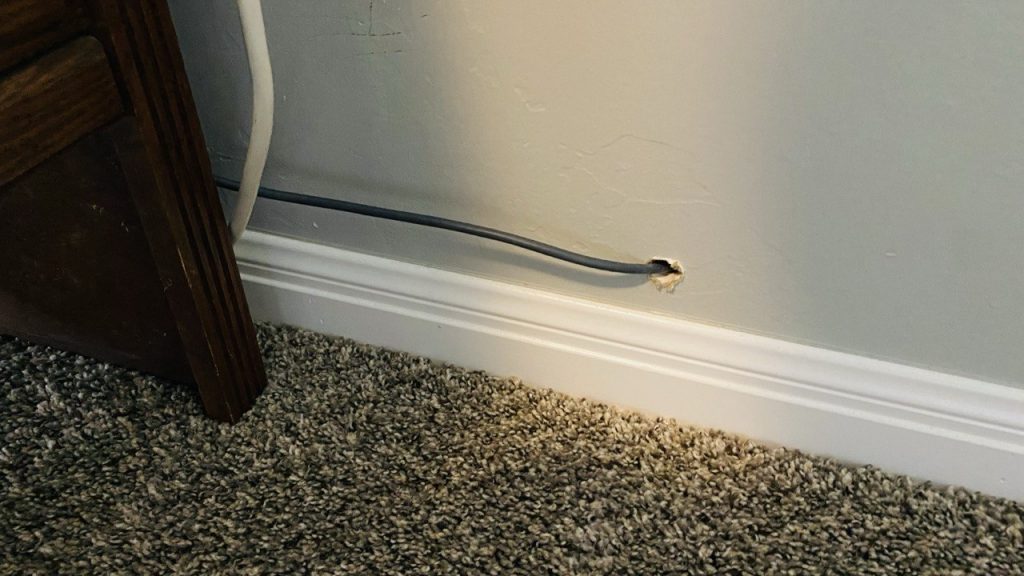
You may need to move a cable through a wall if your set up is room-adjacent like mine. A half to one inch drill bit should do the trick but ensure the hole is low but I would recommend picking up an Electronic Stud Finder with Live AC Wire before you drill to avoid damaging your wires.
Once you have your cables with correct length for the runs, it’s time configure the router to operate without Wi-Fi.
If you have an Apple Airport router, you can use the Airport Utility app to turn off the Wi-Fi. See the walkthrough guide linked here.
Router Configuration
Most home routers can be accessed by entering 192.168.1.1 or 192.168.0.1 into a web browser.

If those don’t work, check your computer’s ‘Default Gateway’ using the ipconfig /all command via the Command Prompt on your Windows PC, or refer to your router’s documentation.
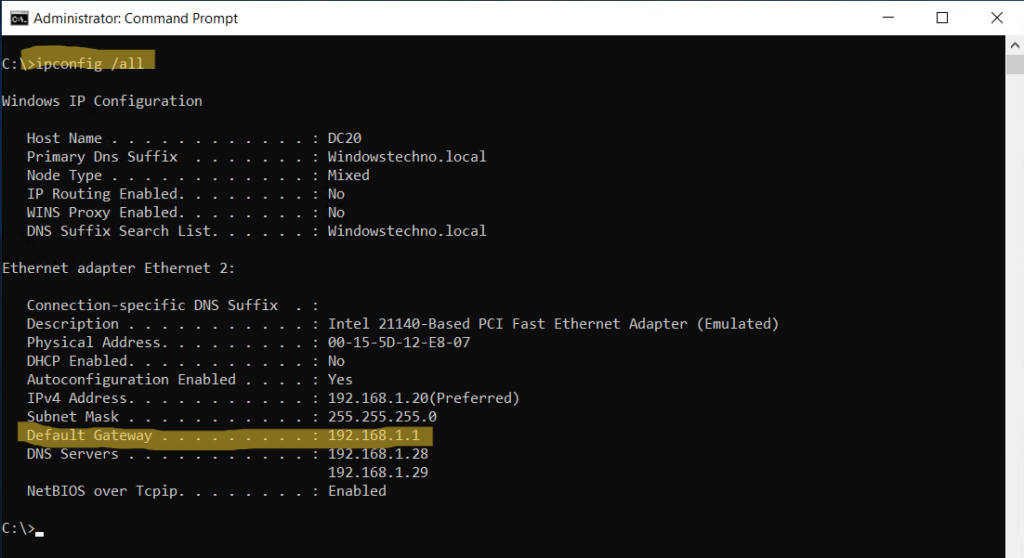
Navigating to the routers settings may not always be as straight forward so I have linked a complete guide by Tech2Geek that should assist.
A Friendly Reminder:
“You don’t have to implement everything. One meaningful change is enough to begin.”
3. BIOS System Tweaks on Windows PC’s
What Is the BIOS?
The BIOS (Basic Input/Output System) is the computer’s built-in startup software. It checks that your hardware is working properly and prepares your computer to load the operating system each time you power it on.
Within the BIOS are settings you can configure to make the computer behave in a certain way separate from the Operating System.
Why I Use These Settings
Over the years, I have come to realize that disabling the radio antennas (Wifi/Bluetooth) on your PC doesn’t always resolve symptoms. For me, I still felt them, not necessarily from the antennas, but the big kicker was the processor.
You see, the processor emits strong GHz electromagnetic fields that encompasses your biofield. When you perform certain resource-intensive tasks, the processor is designed to compensate the workload so it’s clock cycle increases along with he EMR output.
Another thing to be mindful of is the fan speed. Moving PC parts also create electromagnetic fields and though subtle, can be greatly noticeable for a sensitive.
Some Macs also have magnets around the laptop screens frame that ensures the lid remains closed. This also can create a magenetic field.
As with smart phones, if you can find an older model PC that isn’t as technologically advanced, you will generally feel better. Below are some tips to tweak certain BIOS settings
The Golden BIOS Tweak
Our 4 tasks are to disable:
- The Bluetooth Radio
- The Wi-Fi Radio
- Reduce the processors speed
- Most people simply don’t need the extra horsepower for their use case. If you are not editing audio, or video frames, you likely won’t notice much of a difference.
- Change how the fans operate
For this example, we will use a newer Dell computer. This can also be done on older PC’s, you will just have to poke around the settings until you find the right menu options
NOTE: This guide assumes you are already using a wired conneciton.
Step 1. Access the BIOS menu.
When rebooting or starting up your PC, you will want to continuously press the F2 Key until the BIOS Setup menu appears which should look something like the image below.
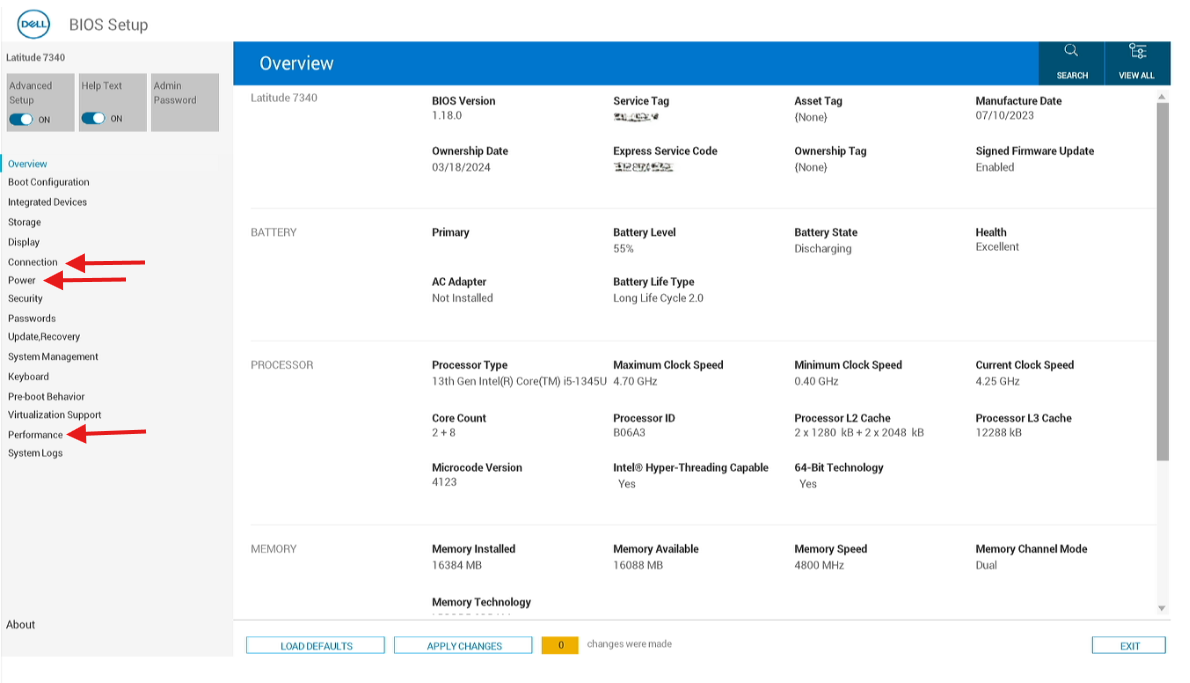
Step 2. You will want to click:
Connection → This is where you’ll typically find:
- Bluetooth Radio – TOGGLE OFF
- Wi-Fi / WLAN – TOGGLE OFF
- WWAN (cellular, if equipped) – TOGGLE OFF
- NFC (if present) – TOGGLE OFF
Power → This is where you’ll often find:
- Fan profiles
- Quiet – TOGGLE ON Or
- Cool – TOGGLE ON
Performance → This is where you’ll usually find:
- Intel SpeedStep – TOGGLE OFF
- Intel Speed Shift – TOGGLE OFF
- Turbo Boost – TOGGLE OFF
Give these a try and check in with yourself. Can you think clearer? Do you feel lighter?
NOTE: You can always revisit these settings and toggle them back at any time, if you need Wi-Fi or Bluetooth for any reason.
4. To 5G/LTE, or Not to 5G/LTE
If you want to keep exposure to a bare minimum, you can toggle off your LTE when not using your phones data and still receive SMS text messages and calls for most carrier phone plans.
This way, you can still be reached for anything important, aside from social media without sacrificing comfort if you are emf intolerant.
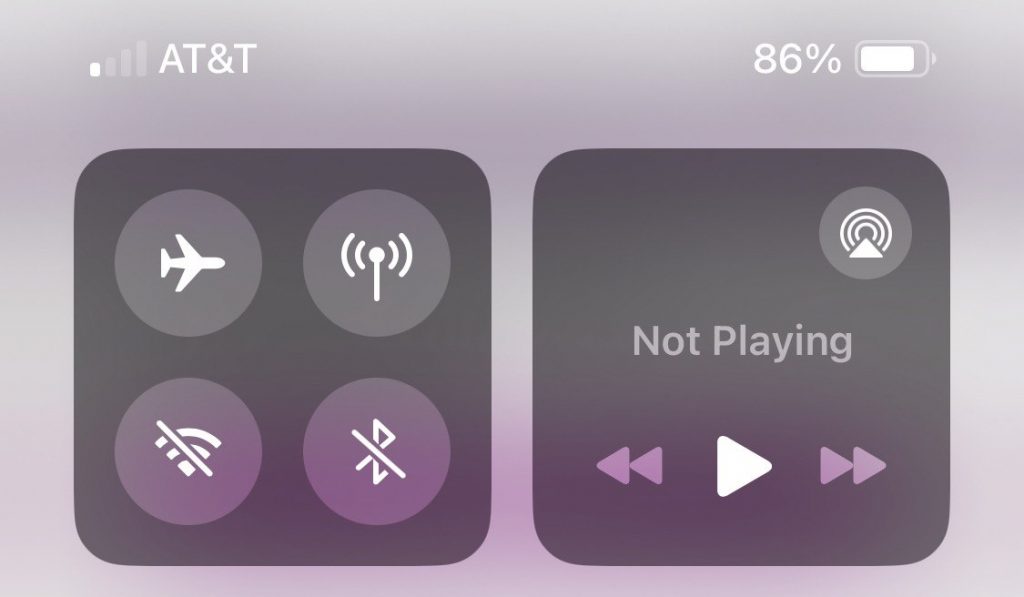
5. Smart Phone Bluetooth & Wi-Fi
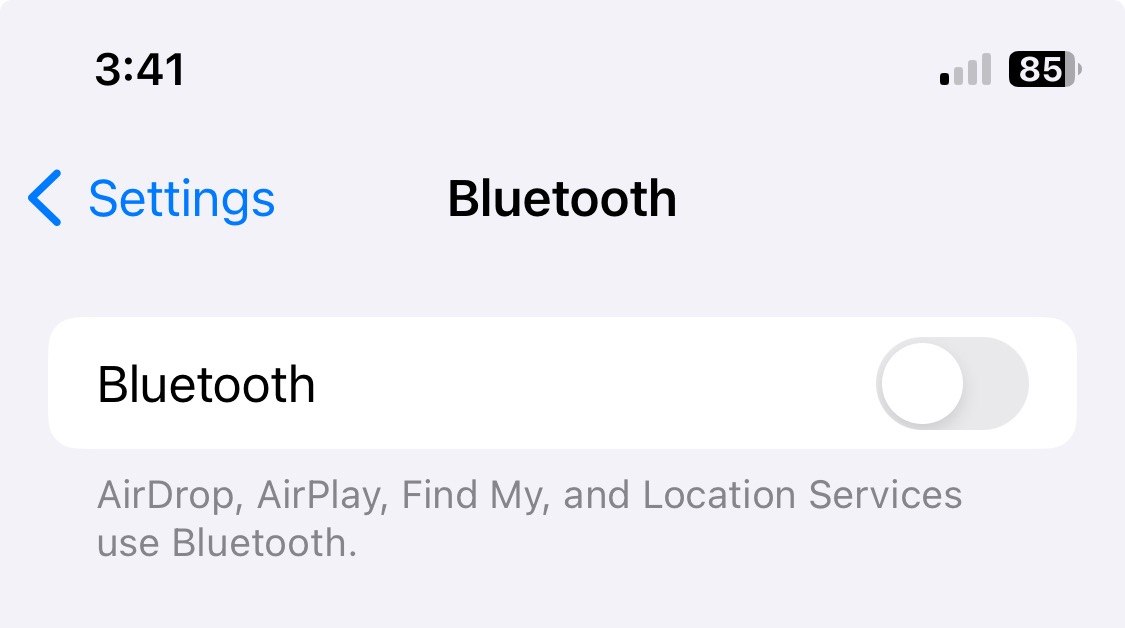
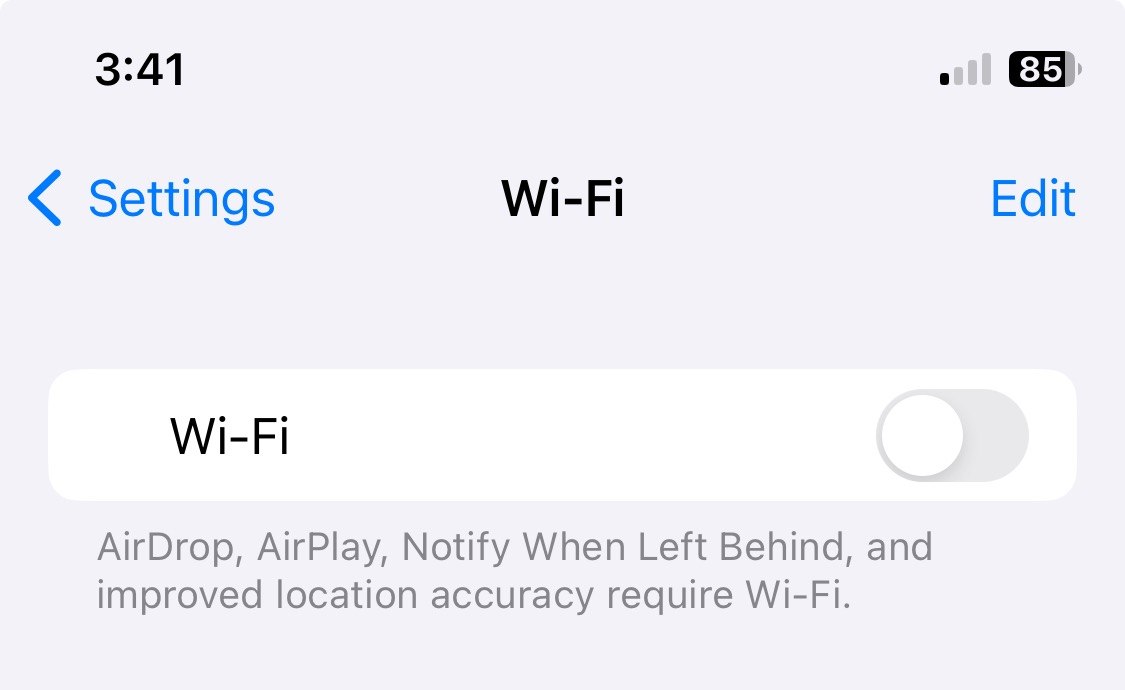
If your Antennas look like the below image, then Wi-Fi and Bluetooth are toggled off BUT they are still periodically pulsing frequency in search of nearby devices to connect to.
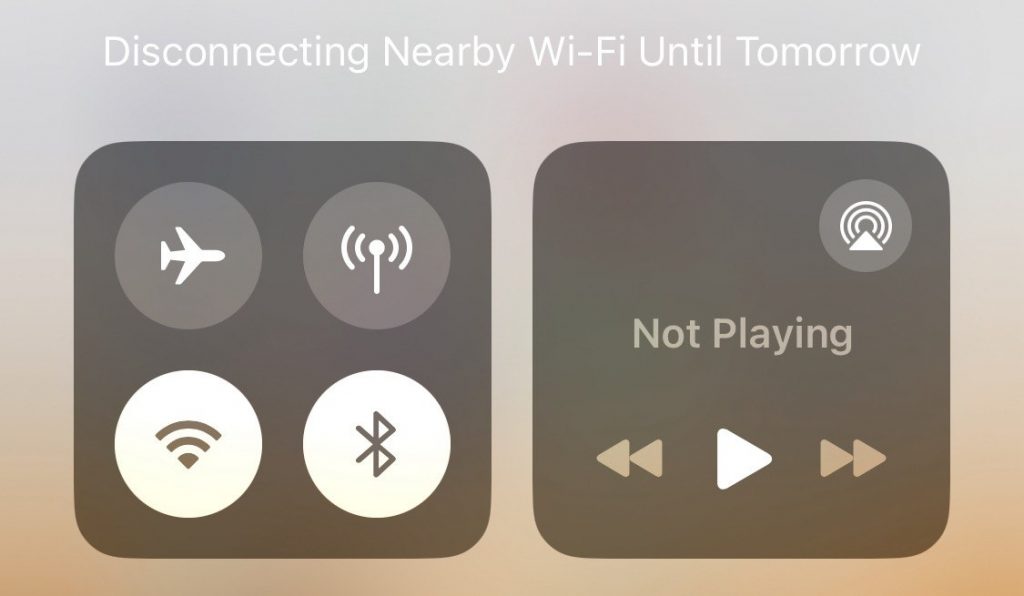
You will want to head over to the Wi-Fi and Bluetooth settings and toggle them off.
6. Place Phone in a Faraday Bag

A faraday bag is designed to block wireless signals from reaching your phone, helping to isolate it from cellular, Wi-Fi, Bluetooth, GPS, and other radiofrequency communications while it’s inside.
If you prefer to keep your phone nearby for emergencies or as an alarm clock, a Faraday bag offers a middle ground without requiring you to move the phone to another room.
From a precautionary perspective, reducing unnecessary wireless activity during sleep may help create a quieter nighttime environment.
Many people also find it beneficial because it removes the temptation to check notifications, scroll before bed, or be disturbed by unexpected calls and messages.
Sleep is one of the body’s most important periods for rest, repair, and recovery. Creating a calm, distraction-free bedroom, whether by using Airplane Mode, placing your phone farther away, or storing it in a Faraday bag is another simple way to support healthy sleep habits.
7. Wire the Smart Phone
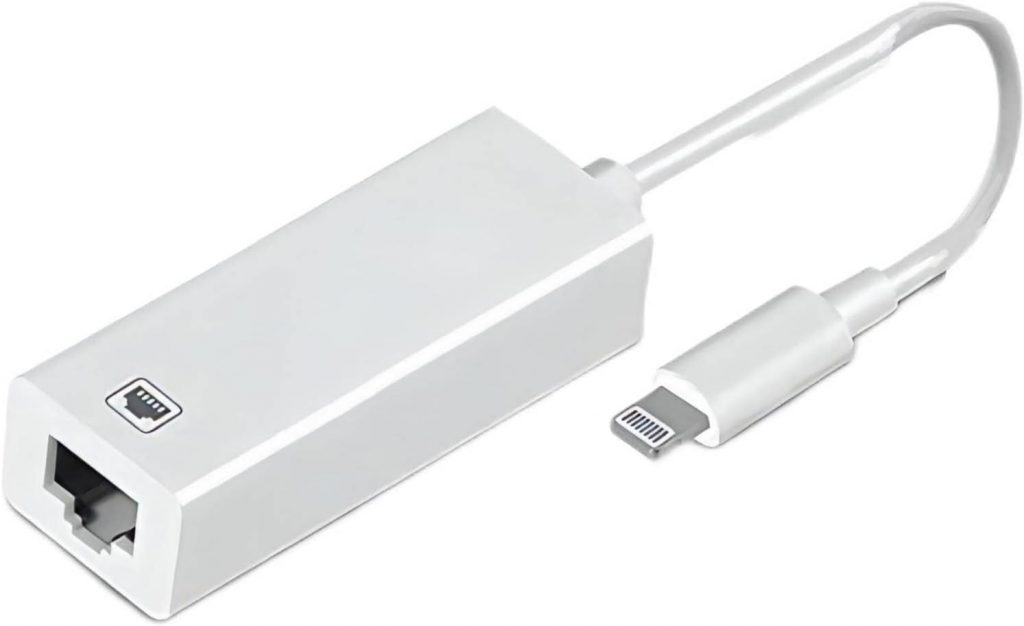
They sell wired ethernet adapters for both Android and Apple smart phones. Again, you will just need a long enough CAT6 ethernet cable to connect to your router.
This is useful for places in the house or office where you use your smart phone most frequently.
How to Use
- Simply plug one end of the cable into an open port on your router, and the other into the adapter.
- The short adapter cable will plug into your phones charge port.
8. Smart Meter Opt-outs
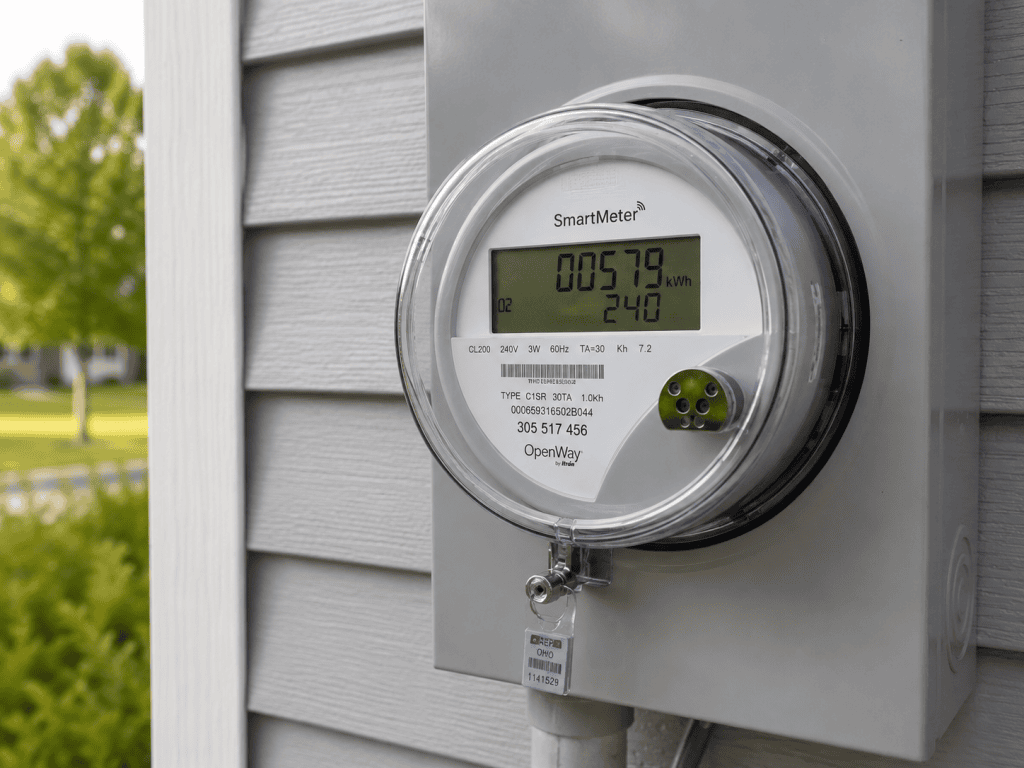
What Is a Smart Meter?
Smart meters wirelessly transmit utility data using radiofrequency (RF) signals many times in a given day. This constant signal transmission has been reported by many people to cause the EMF symptoms previously mentioned.
If you’re taking a precautionary approach to reducing everyday environmental stressors, they’re worth learning about as you make informed decisions for yourself and your family.
Every home and every lifestyle is different, so there’s no universal checklist to follow. The goal isn’t perfection, but curiosity.
Notice how your body responds as you experiment with different changes, and let your own experience become your guide.
More informational resource are available online if you wish to learn more. Here is a great article that sheds more light on the matter.
Utility Company Tracking & Privacy Concerns
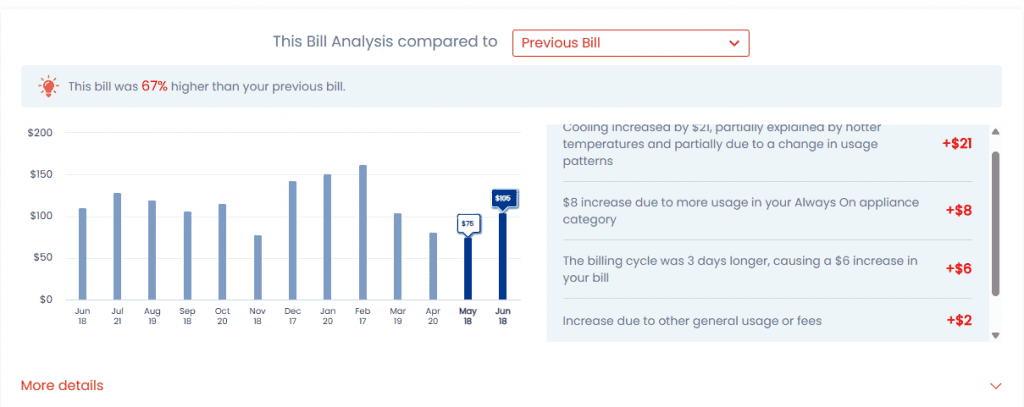
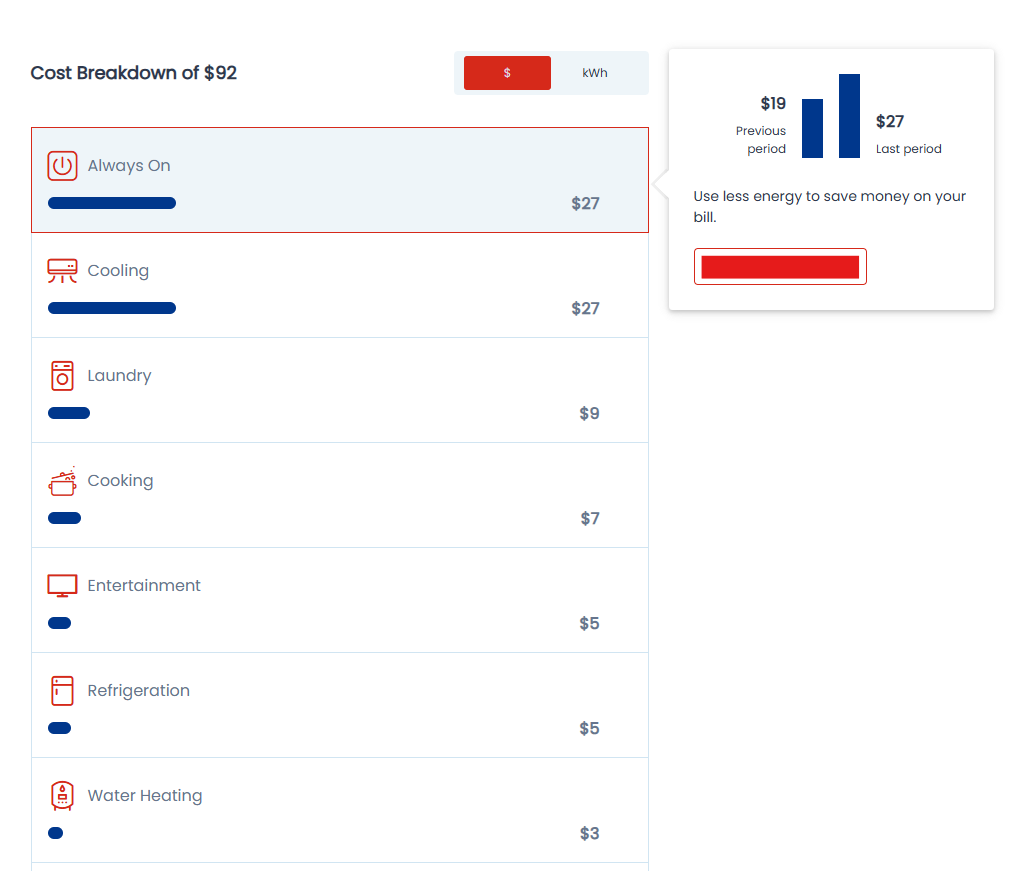
Smart Meters also allow the electric company a sneak-peak into how you use your electricity to help you cut costs and engage in a constant game of reducing your use to save money.
By having a smart meter, you are giving them your precious data allowing them to monitor your use of their resource. Many feel this to be a privacy concern and Orwellian and has big potential for abuse in the future.
As corporations accumulate more data about us and how we live our lives, they can build profiles about us. It’s may be safe to assume that behavioral profiling and predictability models are just a few tools of the many, yet remain another safety measure for them in a time of fear.
Opting Out
Hold on to what’s rightfully yours. Your data and your peace of mind. Thankfully enough people have raised concern that most utility companies now offer opt-out forms.
You can do a web search for smart meter opt out forms for your utilities company or contact them directly for directions on how to send in their form. For a small fee, they will come out and install a dumb meter barring them from collecting data from you.
9. Infotainment Systems In Newer Model Vehicles
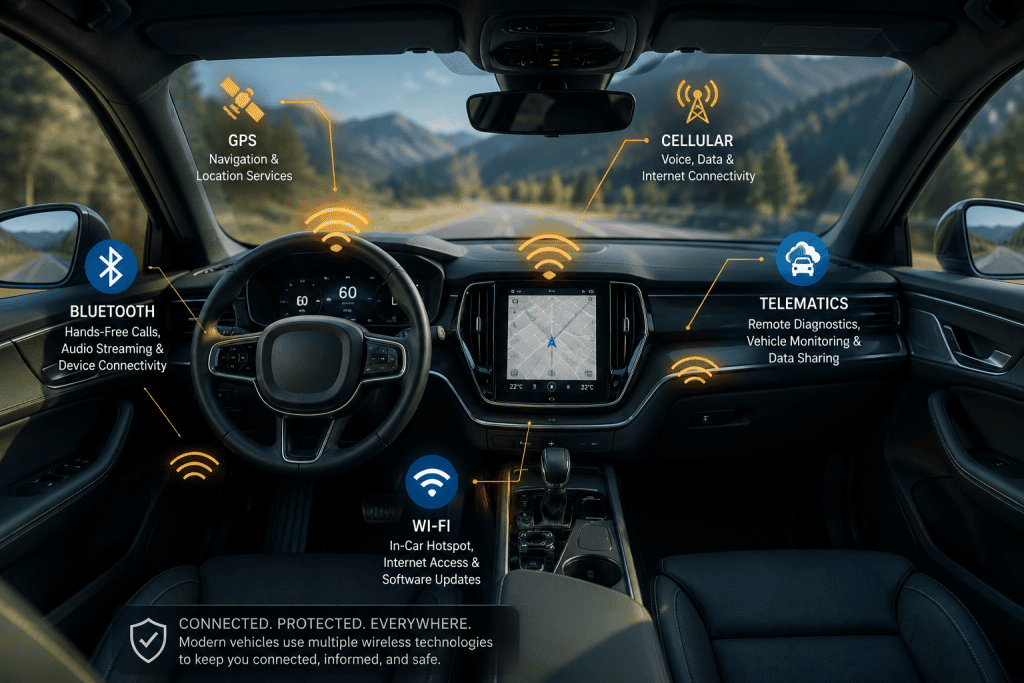
Vehicles have quietly become rolling wireless networks.
Modern vehicles are no longer just transportation. Many now contain multiple wireless systems operating simultaneously, often without the driver realizing how many technologies are active in the cabin.
Auto manufacturers are jumping on the IoT (Internet of Things) wagon and stuffing their vehicles with all kinds of bells and whistles aimed to help make driving safer, however the radiation emitting from these gadgets is accomplishing quite the opposite in my opinion.
A Personal Lesson
From my own experience, I purchased a 2022 model vehicle after only a short test drive because I didn’t notice any of my typical EMF sensitivities right away.
BIG mistake and a valuable lesson learned. Note to self: always opt for the 24-hour test drive before making a decision.
I spent the next month in agony, anxiously waiting for the title to arrive so I could finally sell the vehicle.
During that experience, I was reminded of the concept of entrainment which is the process by which rhythmic cycles naturally synchronize over time.
Sometimes the greatest teacher isn’t theory, it’s experience.
This phenomenon can be observed throughout nature and in biological systems, where external rhythms have the ability to influence internal rhythms.
For example, the body’s heart rate and brainwave activity can synchronize with external stimuli under certain conditions, demonstrating the remarkable adaptability of our physiology.
If you can settle for an older model vehicle, you not only save money on parts, but don’t have to deal with some of the top offenders which will help your physical comofrt and peace of mind.
Reducing Exposure
Below are some things to be mindful of when purchasing a newer model vehicle and helpful EMR remedies from my experience.
A Word of Caution: Some of these remedies involve pulling fuses for systems you may not use. This could affect vehicle functionality or your warranty, so be sure to do your research first. When in doubt, consult your dealership or a qualified technician.
They will be able to disable certain features while keeping the vehicle’s essential systems functioning properly.
- Lane Keep Assist
- This bundle of joy sits about 3 feet from your head as part of the rear view mirror and constantly emits a radar signal detecting where the car is relative to the lane you are in. There is a fuse for this guy and if you don’t need or use the feature, pulling it is helpful in relieving symptoms.
- Bluetooth
- You can toggle these off in the infotainment systems settings menu.
- Wi-Fi hotspot
- Creates an in-vehicle wireless network. Toggle Off.
- Telemetrics
- Modern vehicles often contain a telematics control unit (TCU), which acts as the vehicle’s communication hub. It can use cellular, GPS, Bluetooth, and Wi-Fi technologies to provide navigation, emergency services, remote app features, diagnostics, software updates, and vehicle tracking. If reducing unnecessary wireless exposures is important to you, it’s worth learning what connectivity features your vehicle includes and whether any can be disabled or limited.
- Generally, there is a fuse for this as well.
- Wireless phone charger
- Uses inductive charging (not RF, but it generates electromagnetic fields). There is a fuse for this.
- Occupant monitoring / in-cabin radar
- Uses low-power radar to detect occupants or monitor driver attention.
Where Do You Begin?
You don’t need to implement every suggestion in this guide today. Start with one. Observe. Listen to your body. Build momentum through small, intentional changes that support your health over time.
Healing doesn’t begin when we discover the perfect remedy. It begins when we remove what stands in the way.
Healing begins the moment awareness becomes action.
Final Thoughts
While electromagnetic fields are one important piece of the puzzle, they represent only one of many environmental burdens influencing our health.
In Part 2, we’ll explore other often-overlooked environmental stressors including air quality, water, household chemicals, plastics, heavy metals, and additional modern exposures that quietly shape our biology every day.
Understanding the complete picture allows us to make more informed decisions and continue removing the barriers that stand between us and vibrant health.

Disclaimer: The information provided in this article is for educational purposes only and is not intended to diagnose, treat, cure, or prevent any disease. Always use your own judgment and consult a qualified healthcare professional when making decisions about your health.
Non-Affiliate Disclosure: Unless otherwise noted, I am not affiliated with, endorsed by, or compensated by any companies, products, organizations, or websites referenced in this article. Any recommendations are provided in good faith for educational purposes and are based on my own experiences and opinions.
External Resources: The organizations, websites, and educational resources referenced throughout this article are shared because I believe they offer valuable information for continued learning. Inclusion does not necessarily imply endorsement of every viewpoint or conclusion presented. I encourage readers to explore multiple perspectives, think critically, and make informed decisions based on their own research and circumstances.