
The Breath: Practical Breathing Techniques for Calm, Clarity, and Presence
A guide to conscious breathing, pranayama, nervous system regulation, and emotional healing.

Safety note: These meditation recipes are optional, self-directed, and intended for personal wellness and reflection. Please read the Good Healings Disclaimer before practicing.
Breath Is Life
Our breath is one of the most vital and remarkable functions in our body. Every inhale draws in oxygen, which our cells use to create energy, nourish our brains, and keep our organs working as they should.
Every exhale releases carbon dioxide, a waste product that our bodies needs to clear in order to stay balanced. This quiet exchange is happening every moment, sustaining life in ways most of us rarely stop to consider.
What makes the breath even more extraordinary is that it does far more than keep us alive. It helps us regulate our nervous systems, supports circulation, and influences how calm, clear, and grounded we feel.

A slow, steady breath can soften tension, signal safety to the body, and help guide us into a more relaxed and balanced state. The breath becomes a powerful bridge between body and mind in this way.
When we truly pause to notice it, the breath is doing something extraordinary all day long. It is fueling, clearing, balancing, and restoring with every cycle. This is part of what makes breathwork so powerful!
By bringing awareness to our breath and working with it intentionally, we connect with one of our body’s most intelligent and essential healing rhythms.
Ancient Wisdom & The Science of Breath
Yogi Ramacharaka has written a fantastic book about the true anatomy and physiology of breathing that has really shifted my perspective as to how powerful our breath truly is and how it contributes to optimal health.
The book is called The Hindu-Yogi Science of Breath (1903) – this link takes you to the audio version beautifully dictated by The Master Key Society.
The book creates an awareness that most people breathe inefficiently and therefore live below their physical and mental potential.
Ramacharaka emphasizes deep, diaphragmatic breathing as a foundation for better health, greater vitality, emotional balance, and mental clarity.
He presents breath not as an automatic bodily function but as a powerful tool that can be consciously trained to influence the nervous system, improve self-control, and strengthen concentration.
At the heart of the book is the yogic concept of prana, the life force that flows through all living things. Ramacharaka states that proper breathing helps absorb and direct this energy, creating a stronger connection between body, mind, and spirit.
In short, conscious breathing is one of the most direct ways to transform one’s physical state, emotional experience, and quality of awareness.
The Power of Breathwork
One of the most remarkable things about breathwork is how quickly it can shift our body’s internal state. As previously mentioned, it can help calm the nervous system, release built-up tension, improve focus, and create a greater sense of presence and ease.
It often brings people out of mental noise and back into the embodiment, where there is more space, steadiness, and clarity. In this way, breathwork is a powerful practice for regulation, connection, and inner balance.
Our breath is something we always carry with us. It requires no equipment, no complicated method, and no force, which makes breathwork so profound!
Our breath is already there, waiting to be noticed. When we learn to work with it intentionally, we begin to access one of the body’s most natural and immediate pathways for healing, grounding, and restoration.
Foundational Breathing Practices
Diaphragmatic Breathing
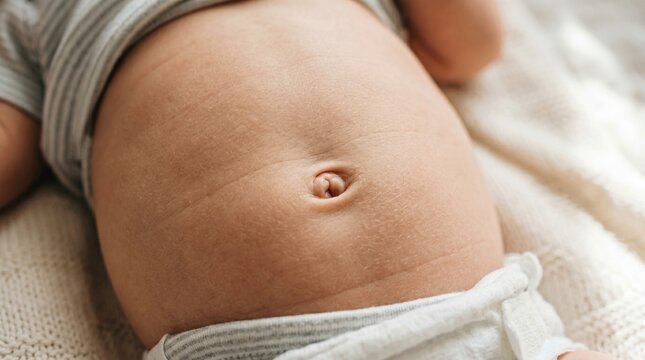
As mentioned in Yogi Ramacharaka’s book, diaphragmatic breathing involves a full exhale followed by a full inhale. This is said to improve blood circulation and optimize blood flow throughout the body.
One of the reasons diaphragmatic breathing is often called “belly breathing” is because it’s the default breathing pattern of healthy infants.
When babies breathe, the diaphragm does most of the work. As it contracts and moves downward, the abdominal shift outward, causing the belly to rise. Their chest moves relatively little compared to their abdomen.
As we age, many of us gradually shift toward more upper-chest breathing due to:
- Chronic stress and sympathetic nervous system activation
- Poor posture and prolonged sitting
- Habitual abdominal tension (“holding in the stomach”)
- Anxiety and hypervigilance
- Restrictive clothing or social conditioning
Ideal breathing isn’t only belly movement. A healthy breath expands:
- The abdomen
- The lower ribs (360° expansion)
- The upper chest slightly.
It is important to note that the belly rises first because the diaphragm initiates the movement, but the rib cage should also widen. Some breathing teachers overemphasize the belly and accidentally create an artificial pattern.
Conscious Diaphragmatic Breathing Techniques
Now that we have highlighted the benefits of the breath, let’s jump into some simple breathing exercises that have been proven to calm the nervous system and increase vitality!
Before we begin, I invite you to take a brief pause for this exercise. While in a seated position, begin by becoming aware of your breath. Notice the pace you are breathing. Is it fast, slow, short, or quick?
Take a couple of conscious deep inhales and slow exhales to settle in. When you’re ready,
Let’s Begin.
- Exhale fully all of the air from your lungs through the mouth. Hold for 5 seconds or as long as comfortable before the inhale.
- Inhale through the nose and fill your abdomen first – you can gently push your stomach outward on the initial inhale.
- Visualize the breath flowing past the diaphragm and into your chest cavity expanding and feeling the air flow into the throat. Hold for 5 seconds or as long as comfortable.
- Exhale slowly and fully again, emptying the air from your lungs.
- Repeat steps 2-4 several times until you notice a shift in your energy.
Do you feel calmer? More balanced? More centered?
Box Breathing (4-4-4-4)
Box Breathing is another one of my favorites for how simple and effective it is for nervous system regulation.
Benefits of Box Breathing
There are many benefits to box breathing but to name a few:
- Reduces stress reactivity by slowing breathing and interrupting the fight-or-flight response.
- Improves emotional regulation by creating a pause between stimulus and reaction.
- Enhances focus and concentration because attention stays anchored to a predictable rhythm.
- Increases breath awareness and reveals unconscious breathing habits.
- Can lower perceived anxiety in the moment by reducing rapid, shallow breathing.
- Builds tolerance to stillness and discomfort through the breath holds.
- Promotes nervous system balance by engaging both activation (inhale) and relaxation (exhale) phases.
One thing that’s often gets overlooked is the benefit isn’t just the breathing pattern, it’s the fact that you’re consciously directing attention. The mind tends to settle when given a simple rhythmic task.
Box Breathing is simple. I often feel like it’s purposely designed this way because when our system is in a fight-flight or freeze state, simplicity is in highest demand.
How to Practice
inhale 4→ hold 4→ exhale 4→ hold 4
TIP: I’ve noticed, the healing effects of this technique become greater the more slowly your inbreath’s and outbreath’s become!
That said, box breathing isn’t always the best tool for every situation. If you’re already highly stressed, fatigued, or prone to anxiety around breath-holding, a simpler pattern such as:
Inhale for 4 and exhale for 6-8
may feel more calming because longer exhales generally encourage parasympathetic (“rest and digest”) activity without the added challenge of holds.
Continue Exploring: The Heart Flower Breath Meditation
If you’re looking for a more heart-centered breathing practice, the Heart Flower Breath Meditation combines conscious breathing with visualization to cultivate gratitude, compassion, emotional balance, and inner connection.
It serves as a beautiful complement to the breathwork techniques explored throughout this guide.
Pranayama Breathing
At its root, pranayama comes from two Sanskrit words:
- Prana = life force, vital energy, animating principle
- Ayama = expansion, extension, regulation, mastery
So pranayama is often translated as:
The expansion and regulation of life force through the breath.
Most people think pranayama means “breathing exercises,” but in the yogic tradition the breath is actually the vehicle, not the destination.
The breath is used because it is one of the few bodily functions that is both automatic and voluntary. It acts as a bridge between body, mind, and awareness.
Benefits of Pranayama Breathing
Calms the nervous system by shifting the body from stress mode into rest-and-recovery.
- Example: You’re stuck in traffic, running late, and feel your frustration building. A few minutes of slow breathing with a longer exhale helps reduce the intensity of the stress response and allows you to think more clearly.
Improves breathing efficiency through better diaphragm function and fuller lung expansion.
- Example: Walking up a flight of stairs no longer leaves you as winded because you’re using your lungs more effectively instead of relying on shallow chest breathing.
Enhances heart-rate variability (HRV), supporting resilience, adaptability, and cardiovascular health.
- Example: After receiving unexpected bad news, you’re able to recover emotionally and physiologically within minutes rather than carrying the stress for hours.
Builds carbon dioxide tolerance, helping the body use oxygen more effectively.
- Example: During exercise, you feel less “out of breath” and are able to maintain a steady pace without feeling the urge to gasp for air.
Improves focus and concentration by linking breath control with mental control.
- Example: Before an important meeting, presentation, or difficult conversation, a few minutes of controlled breathing helps quiet mental chatter and sharpen attention.
Supports emotional regulation by influencing the physiological patterns associated with stress and strong emotions.
- Example: During an argument, instead of reacting impulsively, you consciously slow your breathing and respond more thoughtfully.
Promotes better sleep through slower, more relaxed breathing rhythms.
- Example: Instead of lying awake replaying the day’s events, slow rhythmic breathing helps settle the mind and makes it easier to fall asleep.
Increases energy and vitality by improving respiratory efficiency and reducing chronic stress burden.
- Example: Rather than reaching for a third cup of coffee in the afternoon, a short breathing practice leaves you feeling refreshed and mentally clearer.
Supports recovery and healing by encouraging a parasympathetic (“rest-and-digest”) state
- Example: After a hard workout, illness, or emotionally draining day, breathwork helps the body transition into a state where repair and recovery can occur more efficiently.
────────────────────
Advanced Practice
The following section outlines a structured pranayama and emotional healing method inspired by the teachings of Brad Johnson.
────────────────────
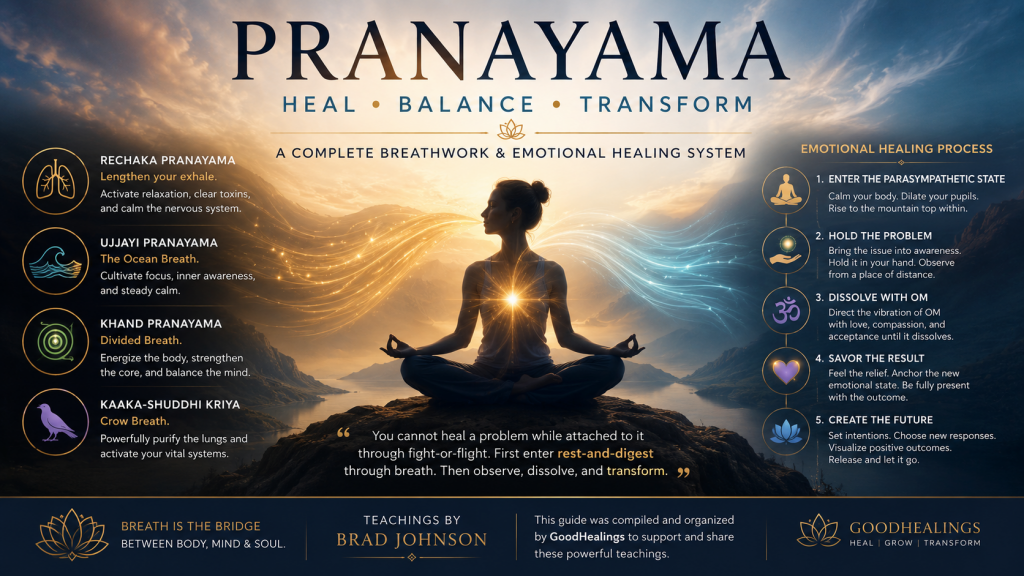
The Pranayama Healing Method
Guided by Brad Johnson
This guide is based on teachings presented by Brad Johnson in his pranayama and emotional healing videos. The material has been reorganized and formatted for clarity while preserving the original practices and teachings.
Editors Note: The structure, formatting, headings, and organization were created by Eric. The practices and teachings originate from Brad Johnson’s presentations.
Who Is Brad Johnson
Brad Johnson is an incredible influencer in the healing space. He is a spiritual teacher, channeler, and meditation instructor known for sharing teachings on consciousness, self-development, energy work, breathwork, and emotional healing.
His work integrates meditation, visualization, pranayama, and practical spiritual development.
I’ve compiled Brad Johnson’s pranayama teachings into a structured practice guide for anyone who would like a cleaner reference.
Download the Complete Guide
Full credit for the teachings goes to Brad Johnson. I’ve simply organized the material into a more accessible format and included links to the original videos.
Final Reflection
The breath is one of the most accessible healing tools we possess. It travels with us through every season of life, offering a pathway back to balance whenever we remember to return to it with mindfulness practice.
Whether you choose to practice a few conscious breaths, explore pranayama, or follow the complete healing method shared in this guide, the invitation remains the same:
Slow down. Become present. Breathe.
In that space, transformation often begins.