
Riding The Bull Technique
How Stillness Unravels Emotional Intensity
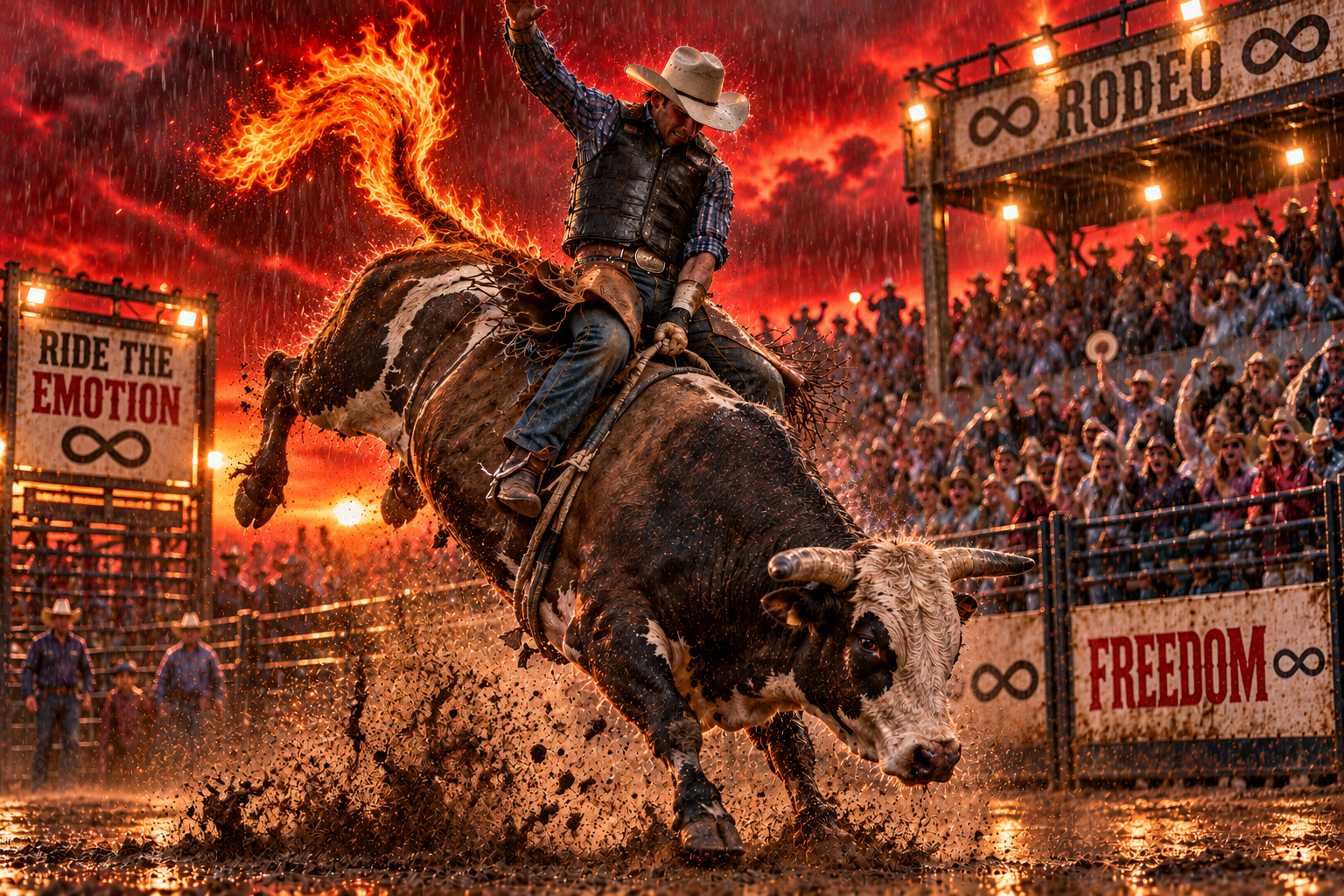
We have all felt it before. The trigger. That familiar surge of emotion that can hit with enough force to feel like we’ve been thrown onto the back of a bucking bull. Anger, sadness, fear, guilt, or shame can rise suddenly and intensely, demanding our attention as we instinctively brace ourselves, fight for control, or simply try to hang on.
The sharp and jagged crimson chards of anger. The deep blue wells of sadness, despair and loneliness and the dark grays of regret, guilt, and shame.
The colors that paint the pictures of the human experience are symbolic of our emotional states and these colors can be applied to canvas in ways that create masterpieces with you as the artist.
At the end of this healing insight, I am going to share an effortless technique on how to successfully ride the bull of intense emotions, but first.
What Are Emotions, Really?
As all things, emotions are energy. Many have phrased this as “energy in motion” hence the wording ‘(e)motion’ but above all, emotions are gateways or invitations that can be used to access deeper parts of ourselves, create deeper meaning, and enhance our relationship with ourselves and those around us.
Throughout time and the many generations before, society has conditioned us away from feeling our emotions and in today’s age of technology where everything is available at the press of a button, we find ourselves distracted and even move in that direction intentionally to avoid feeling.
Why so many distractions? It’s quite amusing how hard we work to not feel. We have truly mastered this art, however it’s consequences are being made known and the more we continue to abandon ourselves the more intense the world becomes. Why?
Because as I alluded to earlier, humans are designed to feel emotions. This is where our magic resides. This is where our creative spark can be expressed. The most beautiful peices of music are often written and played as the product of the creators darkest moments and greatest truimphs!
The Myths, The Mind, & The Heart
We have been convinced that we have to THINK through our emotions. We have made the assumption that we have to “FIGURE IT OUT” using our minds. This is a clever way to keep one looping on a hamster wheel because you cannot “figure out” your emotions with the mind alone.
The mind is a small cog-wheel in the process of emotional processing. It’s when we add the ingredient of the heart, or the aspect of FEELING, that the heavy lifting truly begins. It is through the heart where the unraveling ensues. Where rectification and unification can truly take root, and long lasting change can begin to blossom.
My first post on my 3AM Gems page titled “Let Go” reflects this concept beautifully and is the foundation for HOW to feel. Coming back home to simplicity is truly our greatest ally when navigating intense emotions. Why?
Because when we are in the throws of an intense emotion(s), it becomes increasingly difficult to THINK. Our capacity reduces and the demand for simplicity increases dramatically. So what do we do?
The Story
Everyone loves a good story.
When an intense emotion arises, the mind immediately wants to give it meaning. It wants to know WHY we feel this way.
- Who caused it?
- What does it mean?
- What should we do about it?
- What happened last time?
- What might happen next?
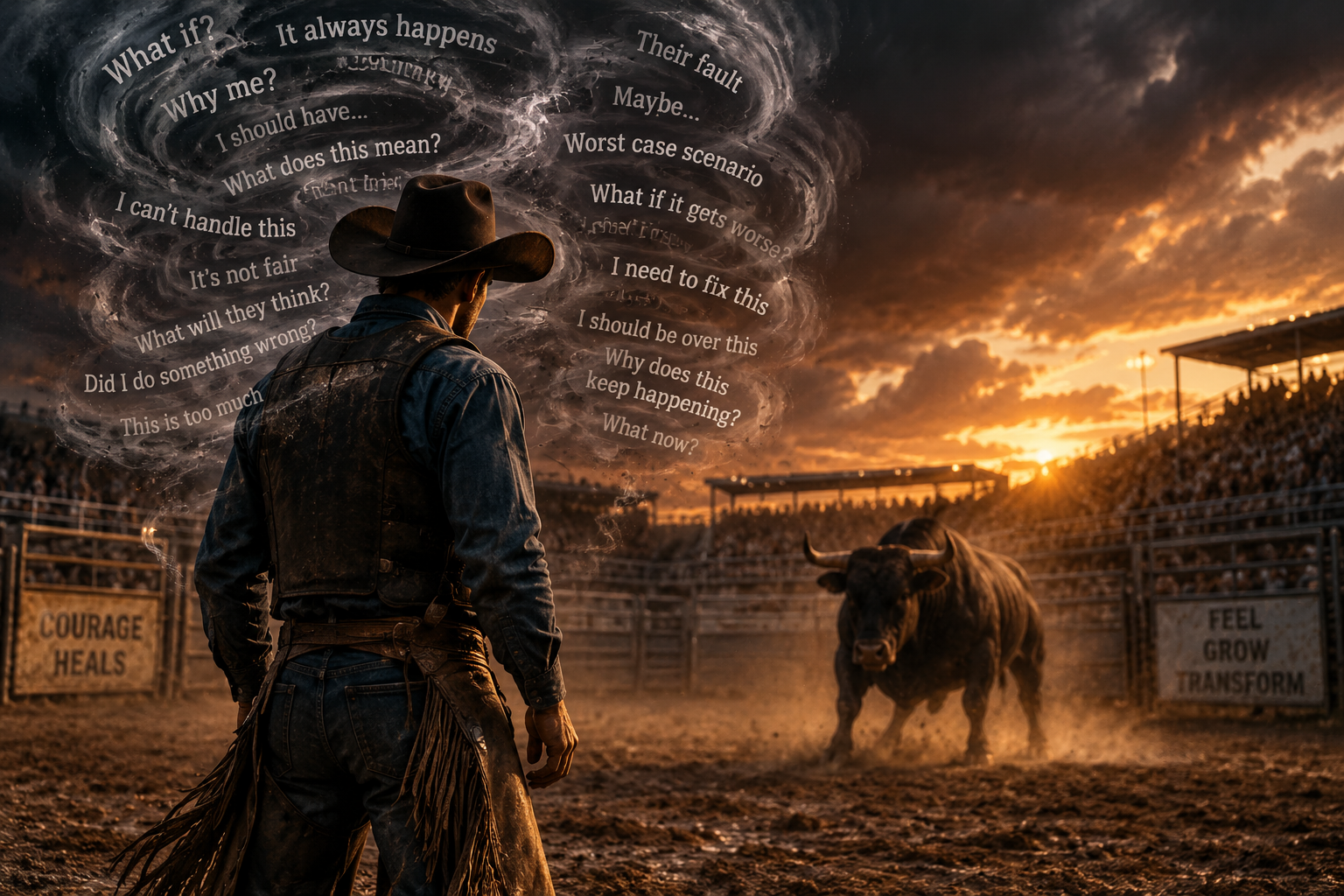
Analysis paralysis sets in and before long, we’re no longer only feeling anger, sadness, fear, guilt, or shame. We’re feeding the emotion an entire storyline.
- “They shouldn’t have done that.”
- “I should have known better.”
- “What if this happens again?”
- “Why does this always happen to me?”
And around we go.
The story may contain useful information. There will be a time to listen to it, reflect on it, and perhaps act on what it reveals. But in the height of emotional intensity, continually engaging with the story can keep feeding the very emotion we’re trying to understand.
But there is another layer to the story that deserves our attention.
It’s not only what we’re telling ourselves about the experience, but how we’re speaking to ourselves while we’re experiencing it.
When we’re hurting, afraid, angry, ashamed, or overwhelmed, the voice within can either add another layer of resistance or become a source of compassion and safety.
Before we get on the bull, let’s look at the relationship we’re creating with ourselves while we’re standing in the arena.
Compassionate Self-Dialogue
As you begin allowing yourself to feel, pay attention to how you speak to yourself while you’re feeling it.
When an emotion becomes intense, our internal dialogue can quickly become another source of resistance. We may criticize ourselves for feeling the way we do, question why we haven’t “gotten over it,” or become frustrated because the emotion has returned yet again.
This is where compassionate self-dialogue can become a powerful companion to the practice.
Instead of treating the emotion as something that shouldn’t be there, interact with yourself as you would someone you deeply care about. Speak inwardly with patience, curiosity, and reassurance.
Much as a caring parent would say to their child, you might say:
- “It’s okay. I’m here.”
- “You’re safe to feel this.”
- “You don’t have to figure this out right now.”
- “I know this is uncomfortable. We can stay with it together.”
- “Whatever needs to be felt right now, I will allow.”
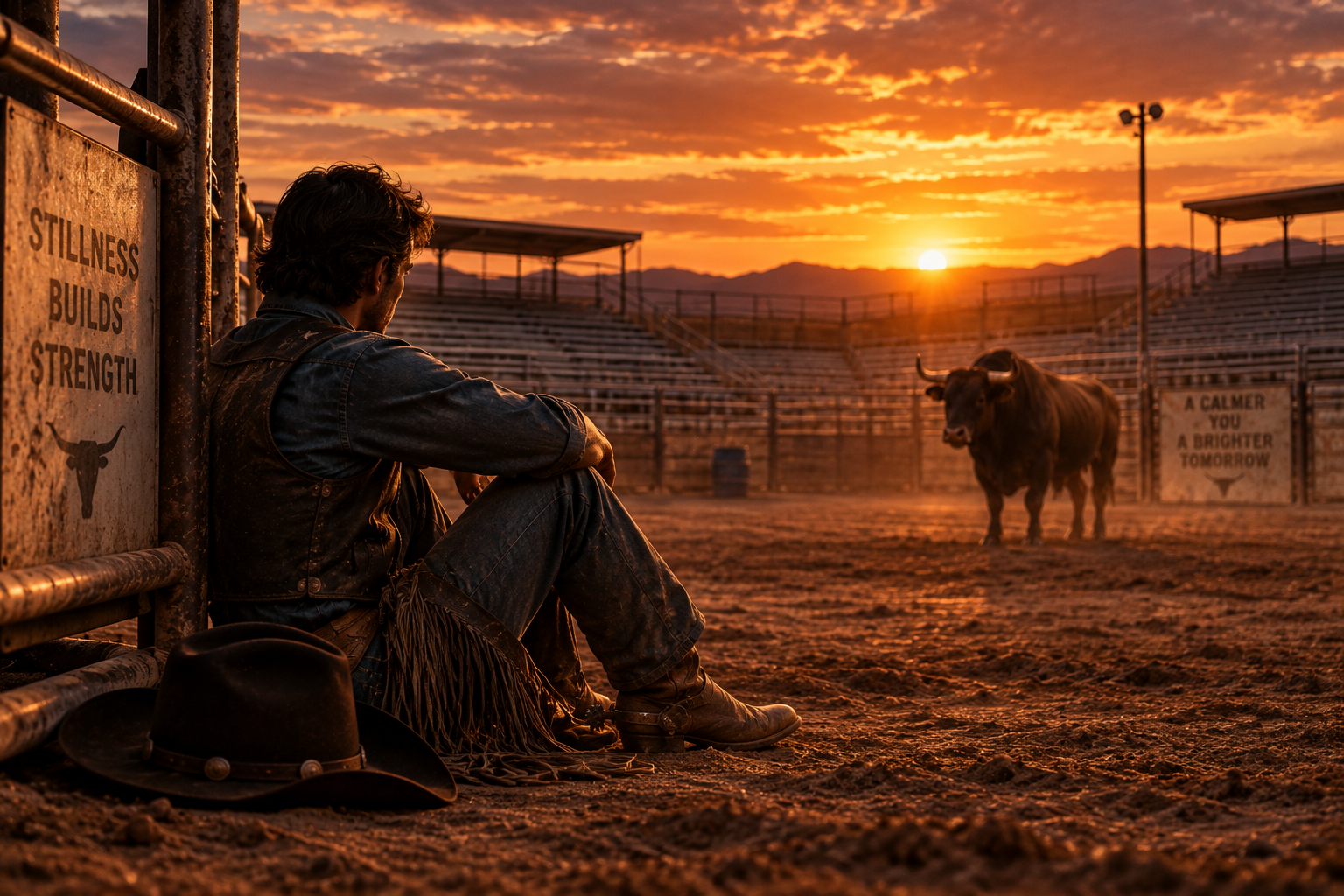
The exact words aren’t important. What matters is the relationship you’re creating with yourself.
The words we choose when speaking to ourselves matter, especially in moments when we feel most vulnerable.
You’re no longer standing outside the experience demanding that it change. You’re turning toward yourself and saying,
“I’m not going to abandon you because this is uncomfortable.”
This doesn’t mean agreeing with every thought that accompanies an emotion or convincing yourself that everything is okay when it isn’t. Compassionate self-dialogue simply creates a safer internal space in which the emotion is allowed to exist without judgment.
And sometimes, the part of us that is hurting isn’t asking to be fixed. It’s asking us to stay.
And staying is where the practice begins.
Instead of trying to solve the emotion, explain it, suppress it, or escape it, we temporarily set the story aside and turn our attention toward the feeling itself. Not because the story doesn’t matter, but because right now we’re interested in what exists underneath it.
You aren’t trying to force anything to happen or make the emotion go away. You’re simply becoming present with what is already there.
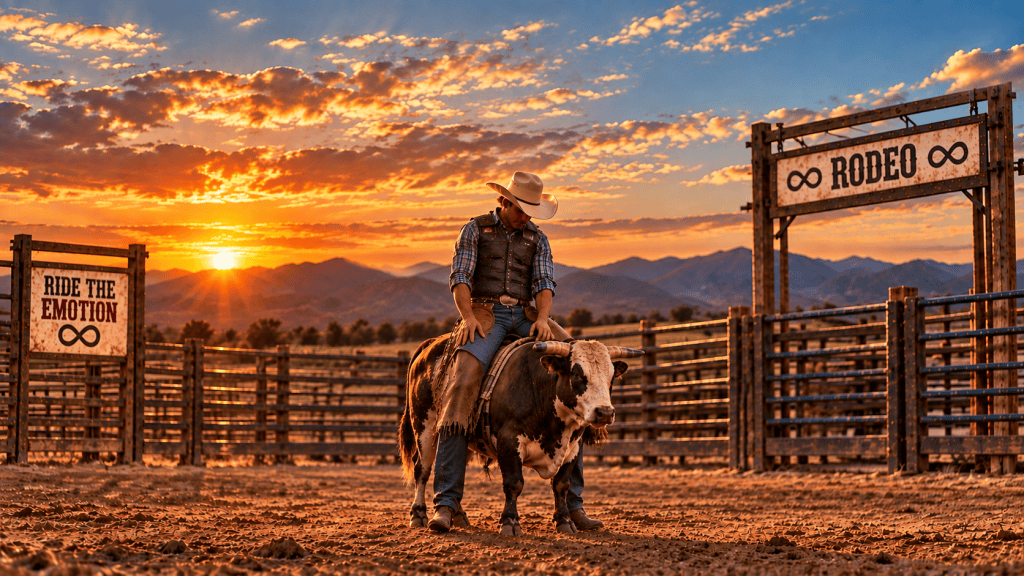
This is what it means to get on the bull and once you’re on, your job isn’t to tell the bull where to go.
Your job is to ride.
Riding the Bull: Experience It for Yourself
You don’t need to be experiencing an intense emotion to practice this. Whatever is present right now is enough.
Let’s experience this together right now. You don’t need to be angry, sad, anxious, or triggered. Whatever you’re feeling in this moment is enough. You can repeat this exercise any time you feel intensity within.
Ideally you will want to find a quiet and comfortable space where you can safely take a moment to become still.
- Become Still
- Notice what you’re feeling right now. Don’t go looking for something dramatic. Just notice what’s already there.
- Find the Feeling
- Bring your attention into your body. Where do you feel it?
- Maybe there’s tightness, pressure, warmth, heaviness, tingling, tension, emptiness, or something you can’t quite describe.
- You don’t need to name it or understand it. Just feel it.

Whatever you’re feeling, this is your bull. It may be intense or it may be subtle. Either way, there is nothing you need to do to it.
- Allow
- Now give the feeling permission to be there.
- Don’t try to change it, fix it, analyze it, or make it disappear. You don’t have to like what you’re feeling.
- Remind yourself:
- I am safe to feel this. I don’t have to like it. I can allow it to be here for now.
- Surrender & Trust
- Instead of bracing against the feeling, soften around it.
- Trust yourself enough to let the experience unfold without knowing where it’s going. If the sensation intensifies, allow it. If it softens, allow it. If it moves, follow it. If nothing changes, allow that too.
- If the mind pulls you back into the story, simply notice it and return your attention to the feeling.
- Don’t control the bull. Ride it.
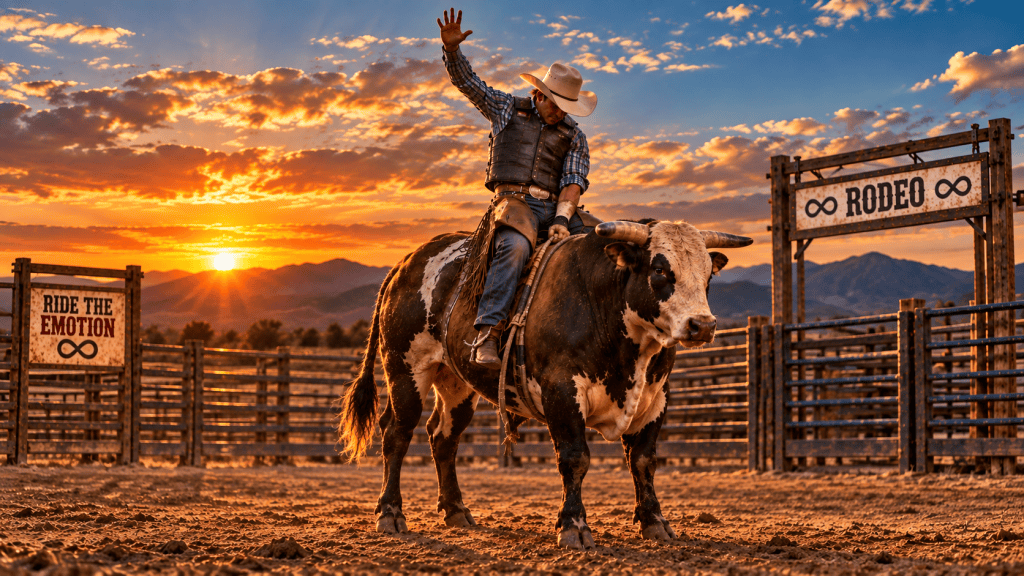
Stay with it. The bull may begin to settle, or it may not. Your job isn’t to make that happen. Your job is simply to remain present until it eventually does.
- Stay
- Remain with the feeling for as long as feels appropriate.
- There is nothing you need to accomplish. You’re not waiting for the emotion to disappear. You’re practicing something much simpler:
- Feeling without fighting. Allowing without controlling. Trusting without knowing the outcome.
- When you’re ready, open your eyes, breathe deeply, and notice how you feel.
Now notice the intensity again. Does the feeling seem as large as it did when you began? Has it softened, moved, changed, or remained the same? Whatever you notice, allow that to be okay.
If you want to explore this a little deeper? My Embodiment Meditation offers another opportunity to become still, return to the body, and practice being present with what arises.
The Bull Was Never the Problem
Intense emotions can make us feel as though something has gone terribly wrong. We want relief, so naturally we try to escape the feeling, understand it, control it, or make it disappear. But sometimes the struggle against what we’re feeling becomes more exhausting than the emotion itself.
Riding the Bull offers another more concious way.
Instead of fighting the emotion, we meet it. Instead of immediately feeding the story, we return to the feeling. We allow, surrender, and trust ourselves enough to remain present with whatever is moving through us.
The bull may buck. It may become still. It may shrink in intensity, only to rise again another day. None of this means you’ve succeeded or failed. The practice is simply learning that you don’t have to abandon yourself when the ride gets uncomfortable.
Over time, something begins to change. The emotions we once feared can become invitations to know ourselves more deeply. What once felt like something to overcome can become something we’re capable of moving through.
We don’t need to conquer every bull that enters the arena.
Sometimes we simply need the courage to get on, loosen our grip, and ride the emotion.